

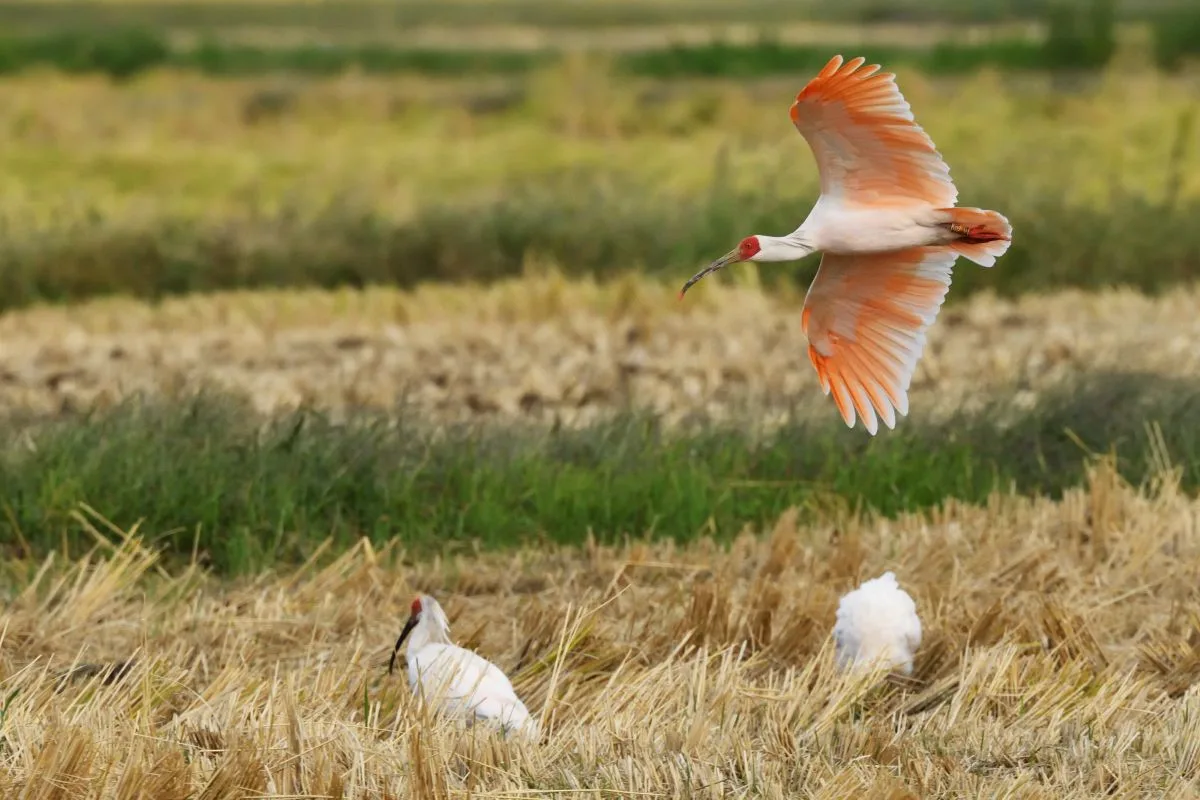
In the pastoral landscape at the center of Sado Island, Niigata Prefecture, pale pink silhouettes flutter gently through the air. These are crested ibis, known in Japanese as toki, birds that once disappeared entirely from Japan’s skies.
“Today, children growing up in Sado don’t think twice about seeing toki flying overhead. Just like sparrows or crows, toki are simply part of the everyday landscape.”
These words, spoken with a smile, come from Tadaaki Aida, CEO of Sado Aida Rice Farming. The story of Sado that Tadaaki tells is not just about delicious rice. It is also a record of the island’s unique and enduring way of life, one that has continued for nearly 2,000 years, and of the responsibility to coexist with nature, something modern society is beginning to forget.
1. 2,000 Years of Rice Farming and a Culture Reshaped by Gold Mining
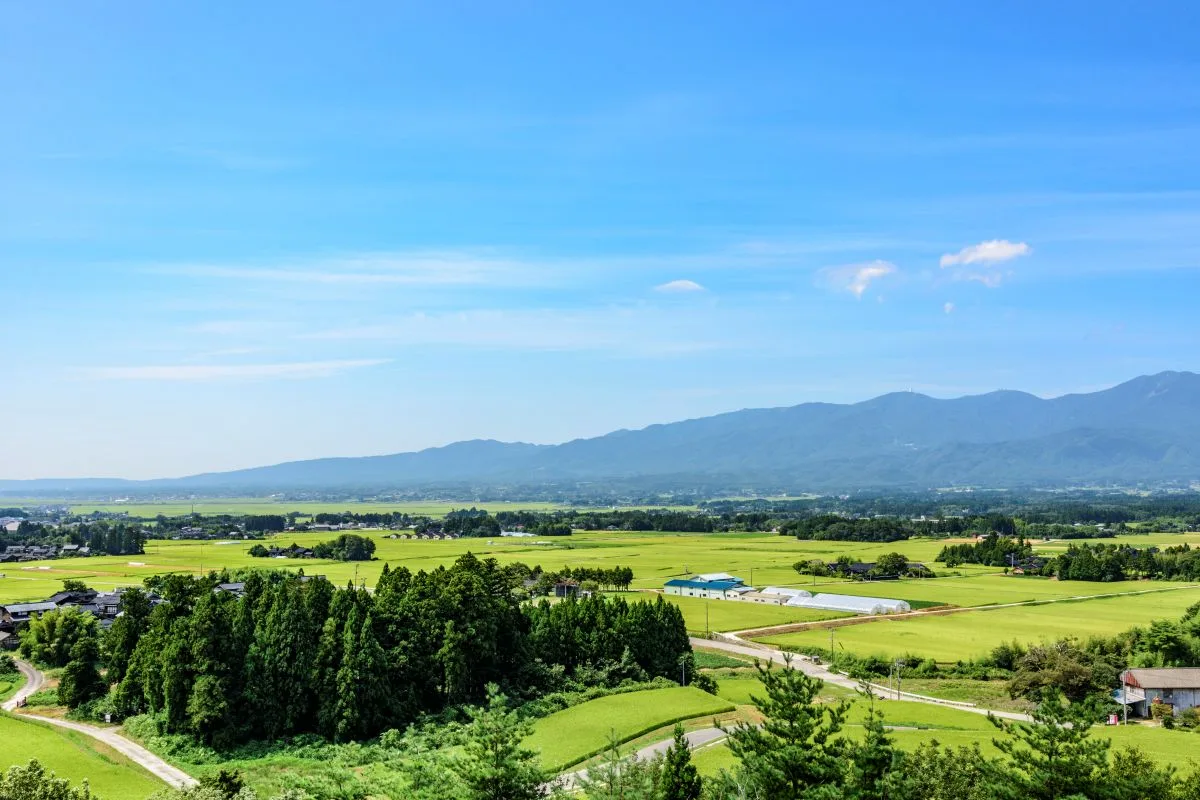
Rice cultivation began on Sado around 2,000 years ago, taking root in the wetlands at the heart of the island. Tadaaki’s paddy fields lie in this same central region. “The rice fields we look after are a treasure passed down to us through the generations without interruption,” he explains.
Over centuries, the layered traditions that define Sado today took shape. During the Middle Ages, aristocrats and intellectuals who lost political struggles were exiled to Sado, bringing with them the refined culture of the capital, which took root on the island.
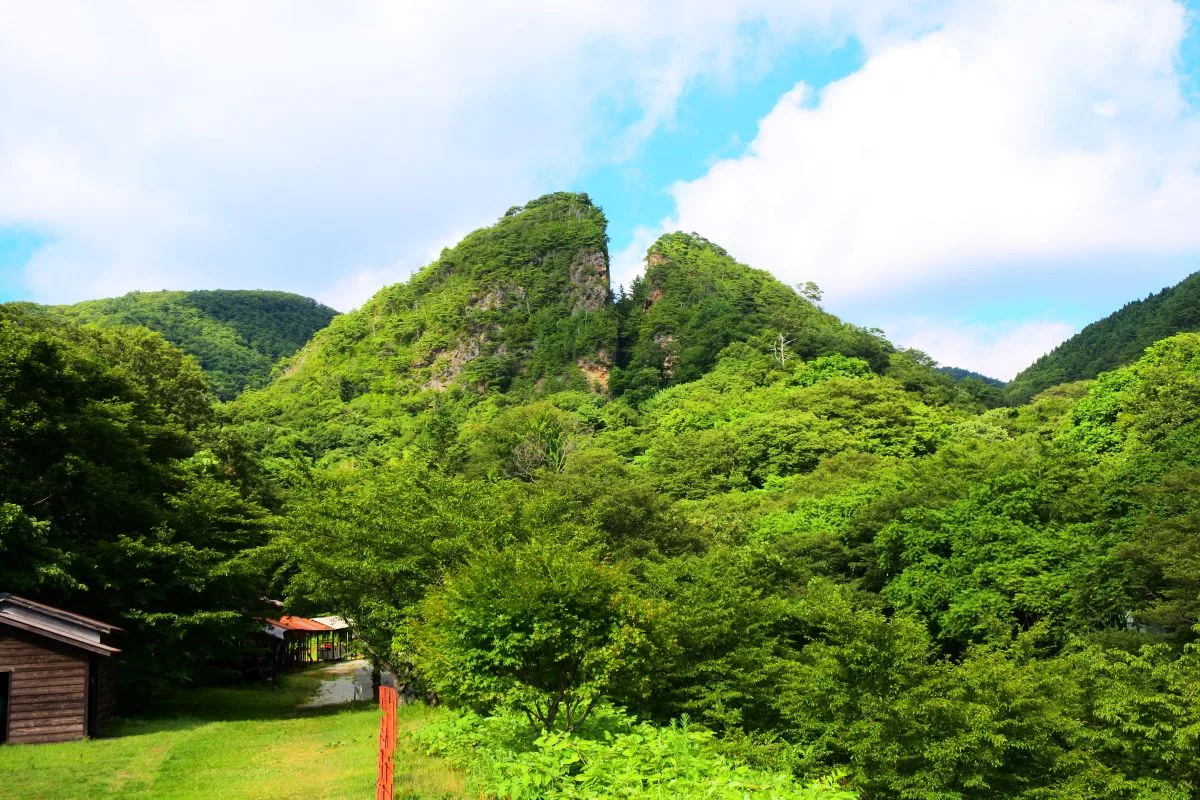
However, Sado’s biggest historical turning point came in 1601 with the discovery of the Sado Gold Mine. As this large-scale national project moved forward, magistrates and officials were dispatched from Edo (modern-day Tokyo), and introduced samurai culture to the island. At the same time, laborers and merchants arrived from across Japan, and Sado developed into a “city” of around 50,000 residents. To sustain this growing population, mountains were cleared to create terraced rice fields, and highly intricate irrigation networks were built. The urgent need for self-sufficiency pushed Sado’s rice cultivation forward, not only as an industry but as a field of technical innovation.
The wealth and vitality generated by the gold mine also gave rise to townspeople culture, carried to the island by merchants and sailors aboard Kitamae ships (merchant vessels that connected Osaka and Hokkaido via the Sea of Japan from the mid-1700s to the early 1900s). In this way, three distinct cultures merged and flourished on Sado: elegant aristocratic culture, dignified samurai culture, and the lively, free-spirited culture of townspeople. Combined with a natural environment where plant life from both northern and southern Japan coexist, Sado came to be known as a “microcosm of Japan,” a place where the nation’s diversity is condensed onto a single island.
2. How Protecting the Toki Ibis Redefined Everyday Life
Today, any discussion of Sado rice must include efforts to reduce pesticides and chemical fertilizers, as well as farming methods that support biodiversity. However, Tadaaki places greater importance on a more fundamental shift underlying the phrase “protecting the toki.”
Agriculture was once swept up in the drive toward industrialization, with an emphasis on efficiency and maximizing yields. It was a time when the use of pesticides and the reduction of labor were widely seen as signs of progress. But when efforts began to return the once-extinct toki to the wild, Tadaaki arrived at a clear conviction: “The fact that toki can live here is proof that the rice and water we consume are safe.”
“Loaches now live in the rice paddies year-round. In winter, when puddles form in the fields, the loaches come to the surface to breathe, and the toki swoop down to eat them. We didn’t do anything special. Just with simple practices like reducing pesticides, we naturally restored an environment where toki could thrive. Because of this, the safety of our water and quality of our rice are demonstrated by the toki themselves.”
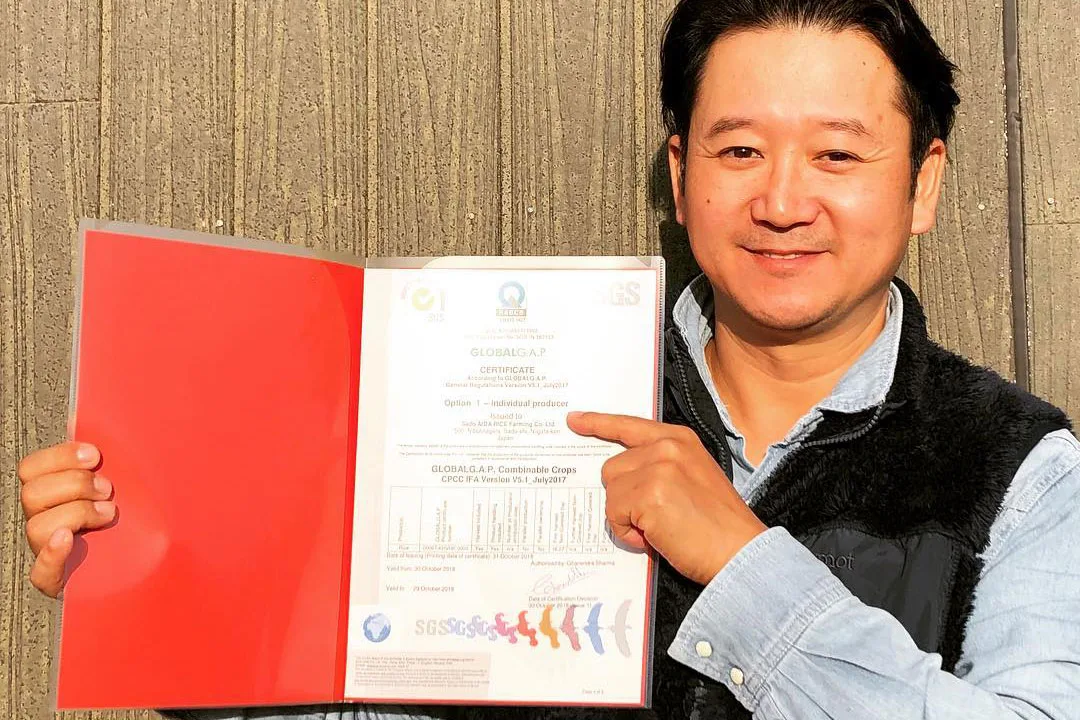
Tadaaki’s farm has maintained strict certifications, including Global GAP standards and Organic JAS, for many years. His meticulously organized workspaces and rigorous cleaning protocols reflect an uncompromising commitment to quality, ensuring that even a single drop of machine oil never comes into contact with the crops.
This is not simply about compliance with rules. It is an expression of deep respect and responsibility toward the land, a commitment to pass on the precious rice fields inherited over thousands of years to the next generation without contamination. Tadaaki pursues uncompromising, professional rice cultivation while preserving the beautiful environment where the toki soar. His long accumulation of effort has become a deep source of pride for him.
3. Agriculture and Onidaiko: Community Memories Engraved in Festivities
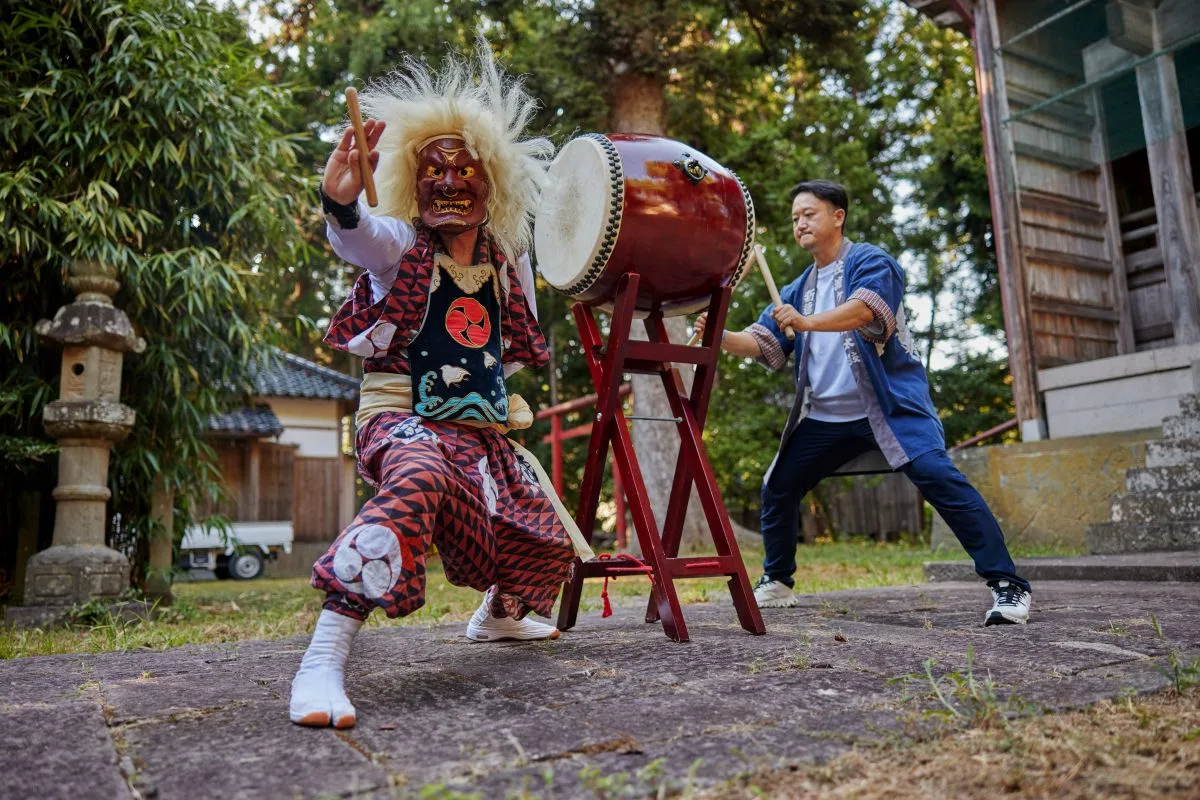
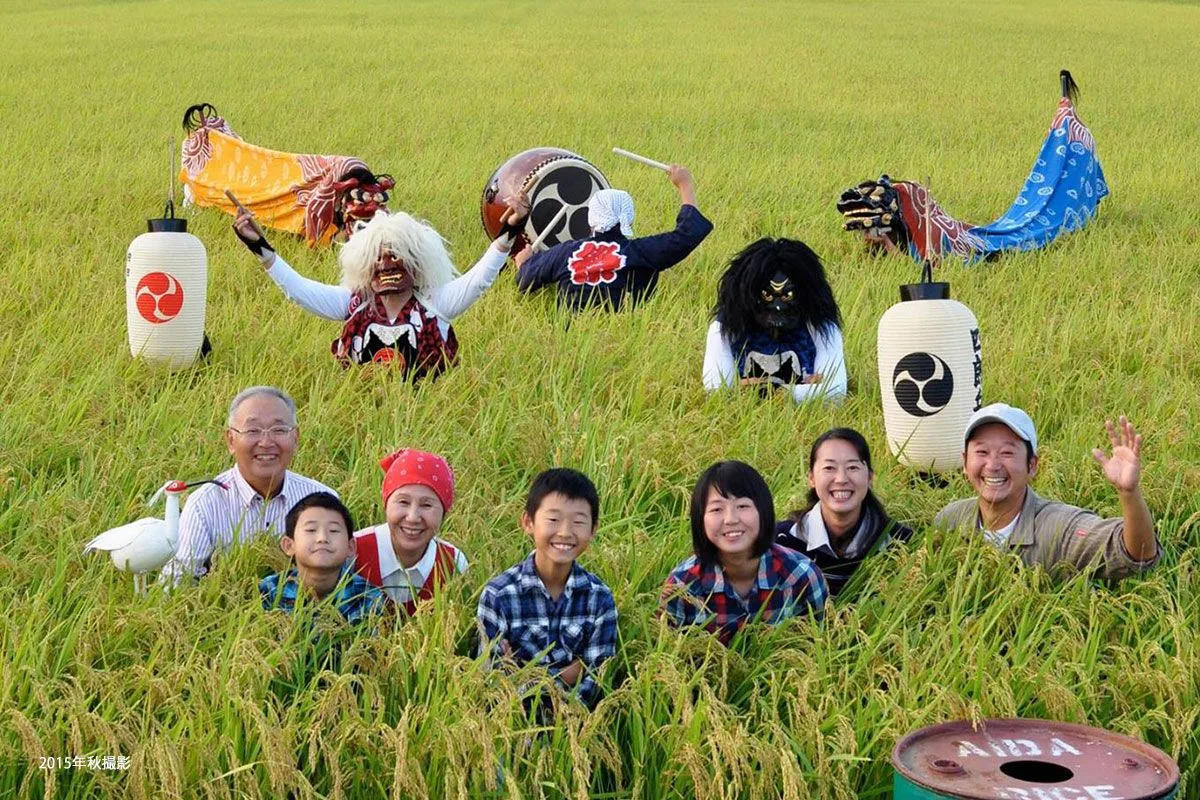
Tadaaki’s activities extend far beyond the rice paddies. He pours his energy into preserving and passing on Sado’s traditional performing art, onidaiko (the demon drum), as well as training the craftspeople who make its instruments. At first glance, the dazzling world of festivals and the dirt-covered reality of agriculture may seem far apart, but Tadaaki’s perspective is clear.
“In the past, many people worked in primary industries. The legs and hips of those working daily in the fields and mountains were very strong. It was that solid grounding that made the powerful drumming of onidaiko possible. Bodies built through agriculture have become the foundation of Sado’s culture.”
However, today the number of office workers has grown, and many young people are unable to take part in festivals held on weekdays. In response, Tadaaki adjusts work schedules during festival periods so that every employee can participate. He is also particular about the straw used for onidaiko costumes and implements.
“Modern combine harvesters are designed for efficiency and cut the straw too finely, leaving nothing suitable for crafting. That’s why we grow a special variety that makes thin but strong straw specifically for festival implements.”
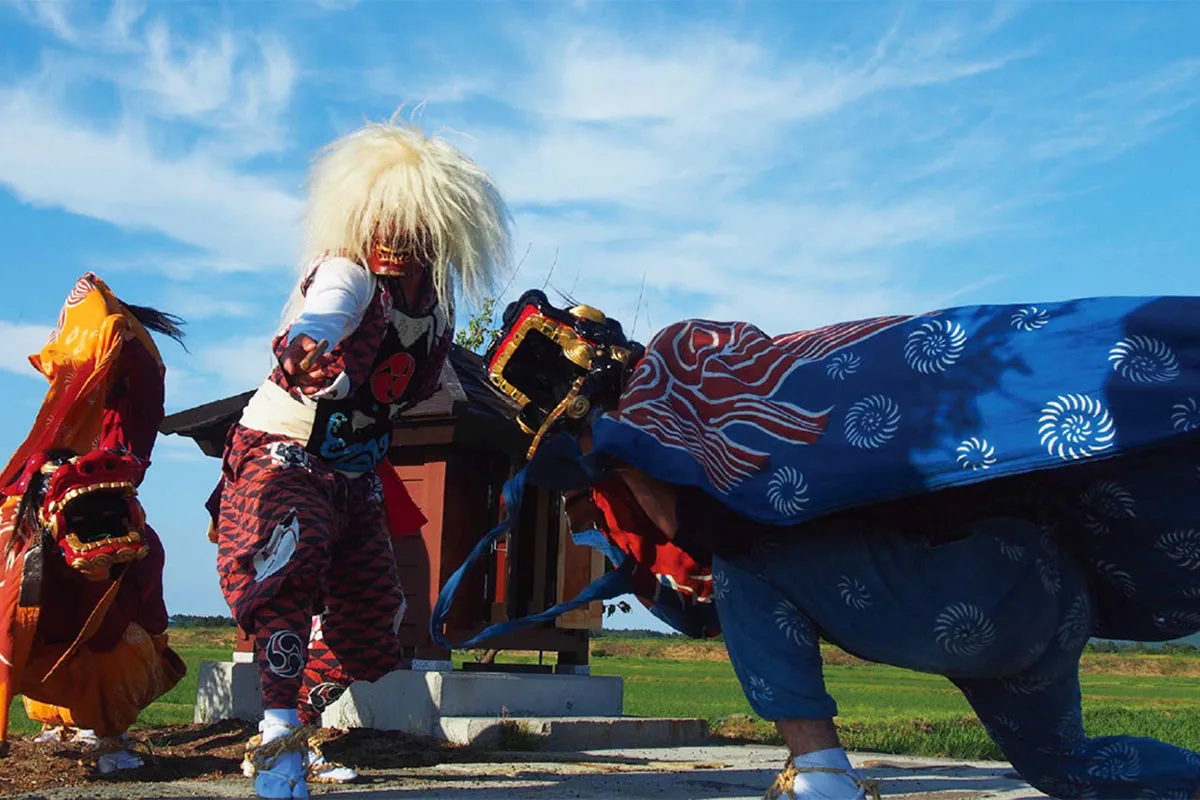
While preserving local connections, Tadaaki also aims to share Sado’s culture more widely, both within Japan and internationally, and his company plans and runs festival tours.
“I highly recommend joining the preparations the day before the festival,” Tadaaki says with evident delight. “That way, you naturally blend into the local community on the day itself and can enjoy the festival as an insider. Someone I guided recently was absolutely delighted and said, ‘I’ll definitely come back next year!’”
Tadaaki shows us that agriculture is not simply an industry that produces food. It is the foundation that supports a region’s culture. For the people of Sado, the onidaiko festival is not merely a spectacle. It is an expression of resilience in the face of a harsh natural environment and an anchor that binds the community together.
4. Toward Sado 100 Years from Now: Passing On What Connects Us
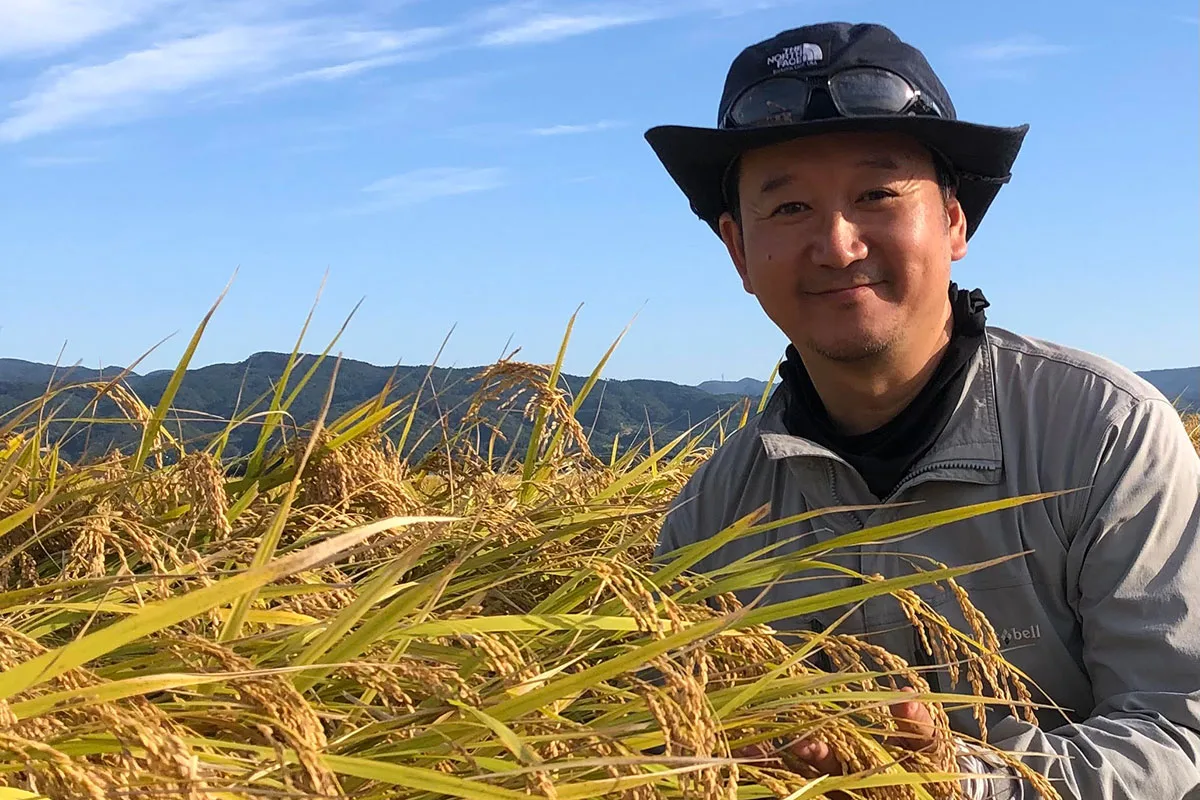
“We can’t let something that’s lasted 2,000 years end on our watch simply because it’s inefficient,” says Tadaaki, his gaze fixed on what Sado may look like 100 or 200 years from now.
As rice consumption declines across Japan, agriculture has become increasingly challenging. Even so, Tadaaki engages directly with customers around the world, from Paris to New York and other global cities, delivering not only Sado rice but the stories behind it. He believes this is because their approach to rice farming embodies values that resonate universally. Tadaaki says, “What we’re doing now is creating Sado’s landscape a century from now. A place where toki are an everyday sight, where delicious rice is grown, and where young people proudly beat the onidaiko drums. That’s the future we want to create.”
At dusk, toki once again soar across Sado’s sky. Beneath them, rice grows as it does each year, and in autumn, the sound of onidaiko drums will echo across the island. Just as their ancestors did 2,000 years ago, Tadaaki works with his own strong hands to carry this enduring way of life into the future, ensuring it is passed on to the next generation.