


My local place
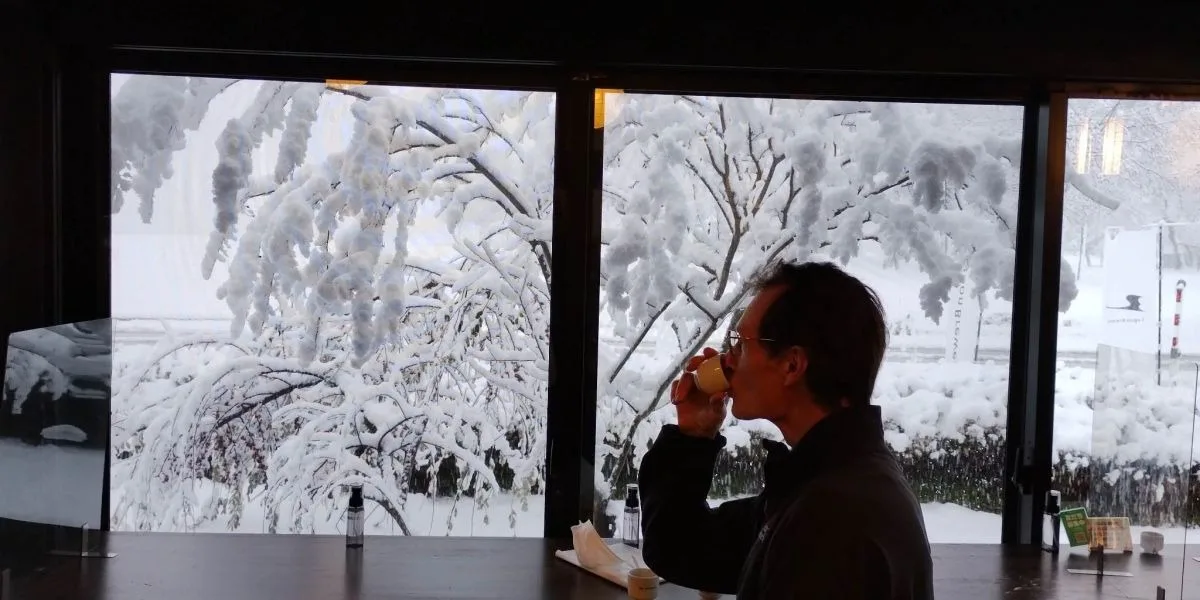
Inside the terrace of Niigata’s aptly named Lagoon Brewery, I am sipping doburoku, a cloudy varietal of Japanese sake. The snow-white peaks of the closest Niigata mountains (about 12 kilometers distant) are sharply visible through the window. I hear the calls and see the silhouettes of flying swans, geese, and hawks against the mountain backdrops. They fly to and from Fukushimagata, a large lagoon in my neighborhood. And, it is my favorite place in Niigata City.
This tiny craft sake brewery is excellent for relaxing in the late afternoon, sampling, sipping, and savoring. The rice-flavored drink slips over my tastebuds. In the distance, rivers wind down Niigata’s mountains to meet in Fukushima Lagoon before flowing to the sea. Contemplating the taste and view, I appreciate Niigata so much.
Japanese sake became my favorite drink soon after moving to Japan. Living in Niigata, I experience the world of sake in nature, rice fields, Niigata breweries and their sake events, and my sake cup.
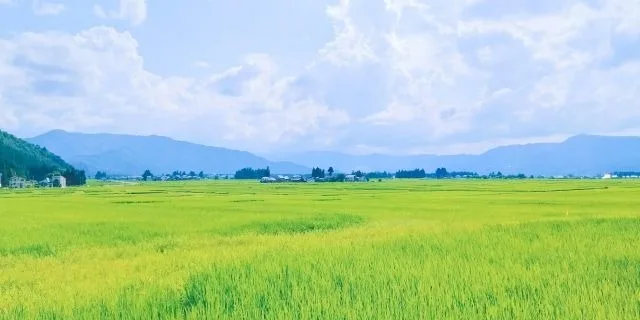
When I speak to Niigata residents about local sake, they rave about their mountains, snow, water, and rice to explain why their sake wins so many awards. Some areas of Niigata receive eight to ten meters of snow yearly. The snowmelt enters streams, rivers, and the immense plain of fields covering vast sections of Niigata with premium rice varieties.
Rivers, snow, and sake fascinate me. On my days off in winter, if I’m not sampling one of the hundreds of Niigata sakes, I’m probably at a ski resort or snowshoeing on snowcapped mountains.
In the mountains with sake
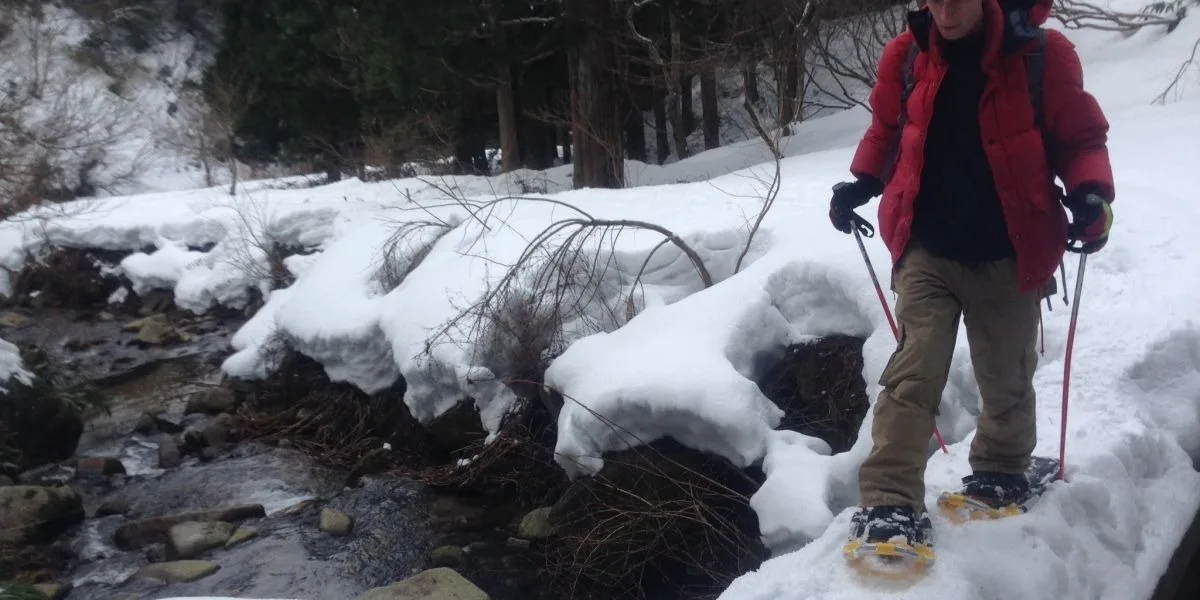
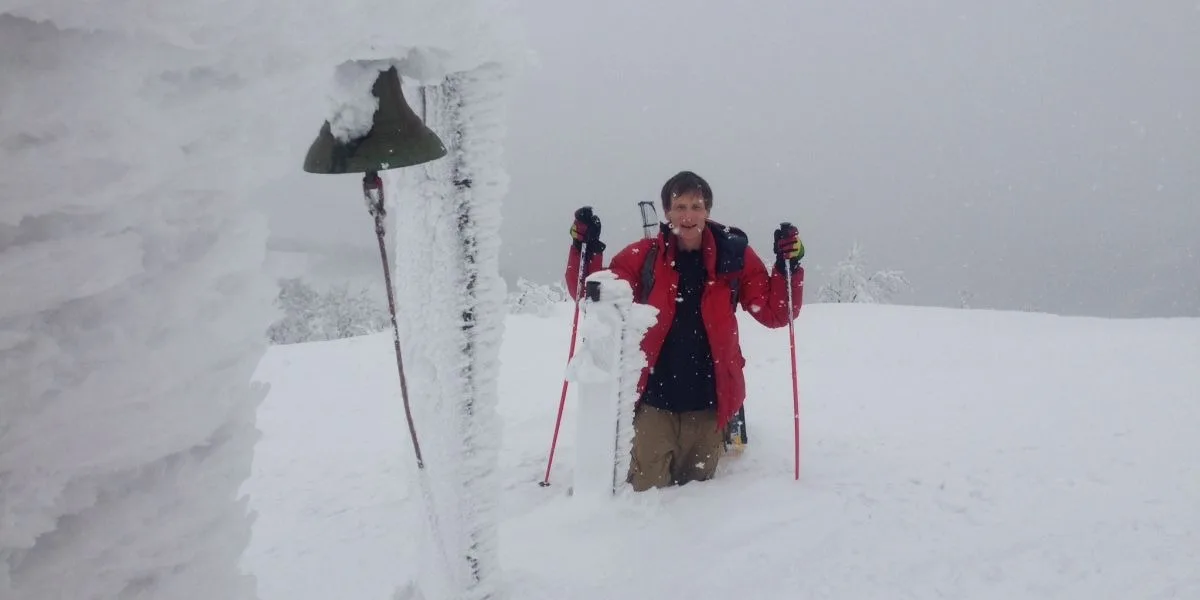
Finally, at one great peak above the tree line, in temperatures far below zero, we found a metal bell suspended from a wooden beam thickly covered in rime ice and snow. Japanese hikers ring such bells to celebrate the climb. We celebrated our accomplishment with the resonant bell and one cup of pure sake before returning. It was another perfect location for enjoying sake.
Small family rice farms
While descending, we saw rice fields far below. Predominantly family owned and cultivated, the tiny snow-covered rice fields looked like chessboards stretching between the mountains and sea. In a few months, they would turn spring green, then dark green, before finally transforming to gold.
I scanned the horizon for the home of my organic-rice-farming friend, Mr. Ueno. Some years ago, when I visited him, he raised ducks in his fields. They eat insects that other farmers would kill with pesticides. Before the pandemic, organic farmers gathered at his home to share alternative rice production techniques. Local friends, students from nearby colleges, and supporters, some from Tokyo, joined the Ueno family to plant young rice by hand and later harvest the mature rice with sickles. Afterward, we shared freshly cooked Niigata rice, miso soup, pickles, and lots of sake. Unfortunately, these gatherings ended because of the pandemic. I hope for these joyous occasions
Sado sake and sea views
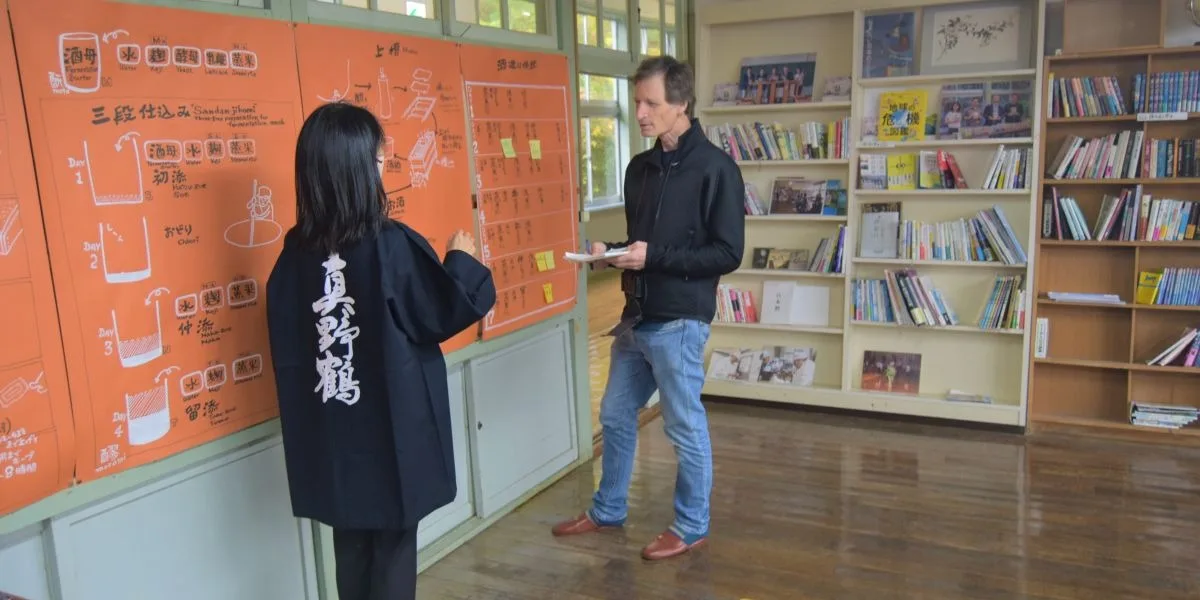
Another exciting sake-related experience on Sado Island was visiting the Gakkogura-School Brewery Project. The Obata Sake Brewery, which gives tours at its main brewery, converted an empty elementary school into an additional brewery, community event space, and café. Perched on a hill overlooking the sea and wildly colorful sunsets, the café is a comfortable space for sampling the unique sakes the new generation of brewers produces. In addition, the brewery offers a unique one-week program for visitors to learn sake brewing and meet with locals. A foreign acquaintance of mine raved about his experience. I am considering applying in the future.
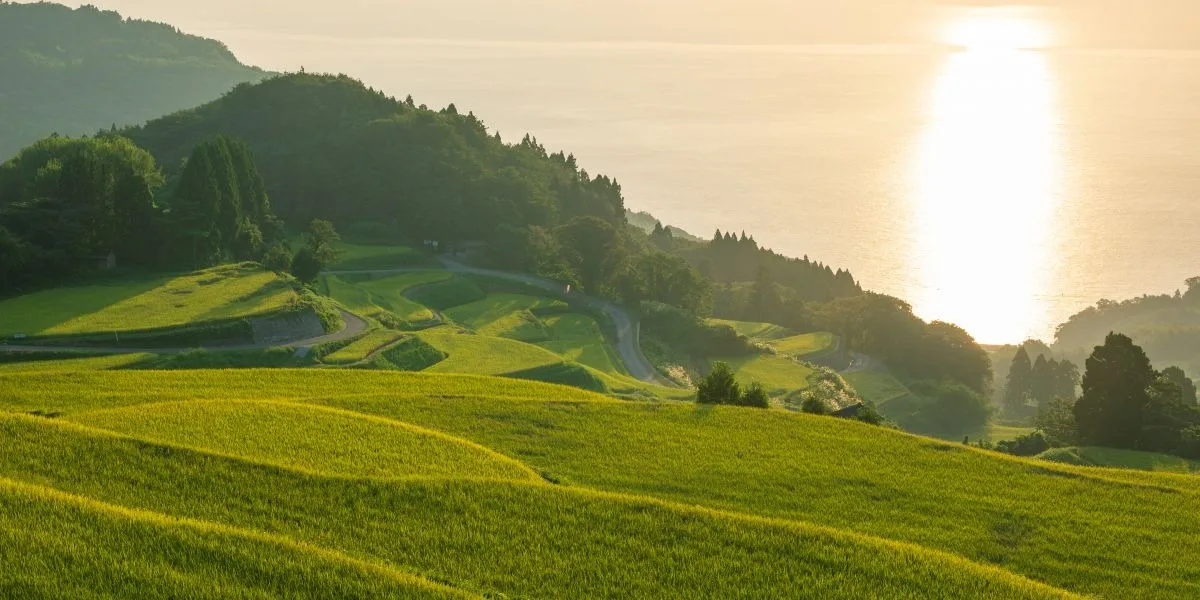
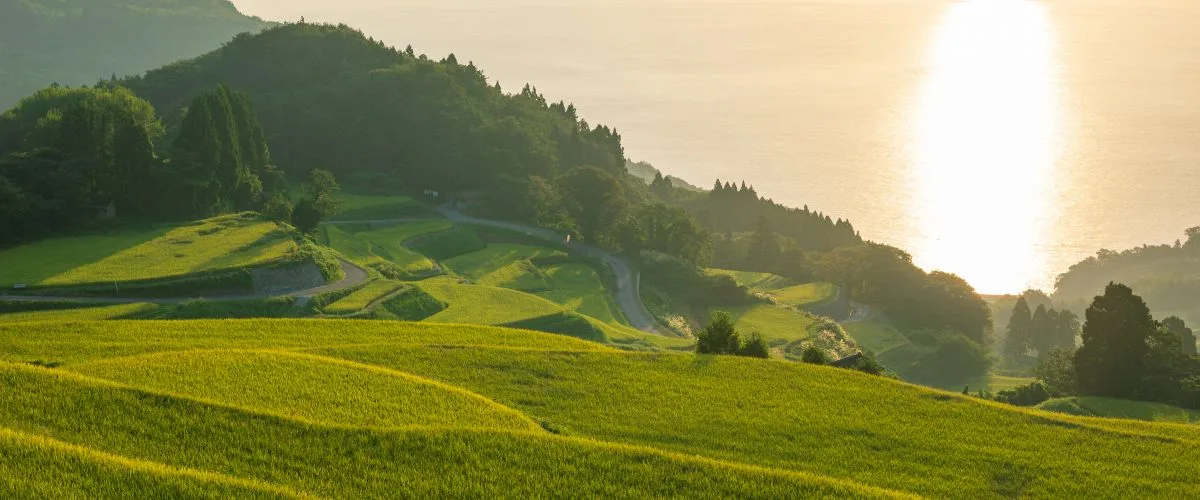
Previously on Sado, I enjoyed a sake-enriched picnic at the Iwakubi Shoryu rice terraces, which I think are Japan’s most beautiful. Hundreds of years ago, farmers constructed terraces for growing rice on the steep slopes of a mountain rising from the sea. Today, these relics of the past still produce rice. Some of the rice from these fields might have been one of the simple, pure ingredients in the sake I drank at that lovely picnic during which the sun glittered on the sparkling water in fields overlooking the Sea of Japan.