

Sado Island’s Distinct Traditional Culture - A Blend of Diverse Cultures
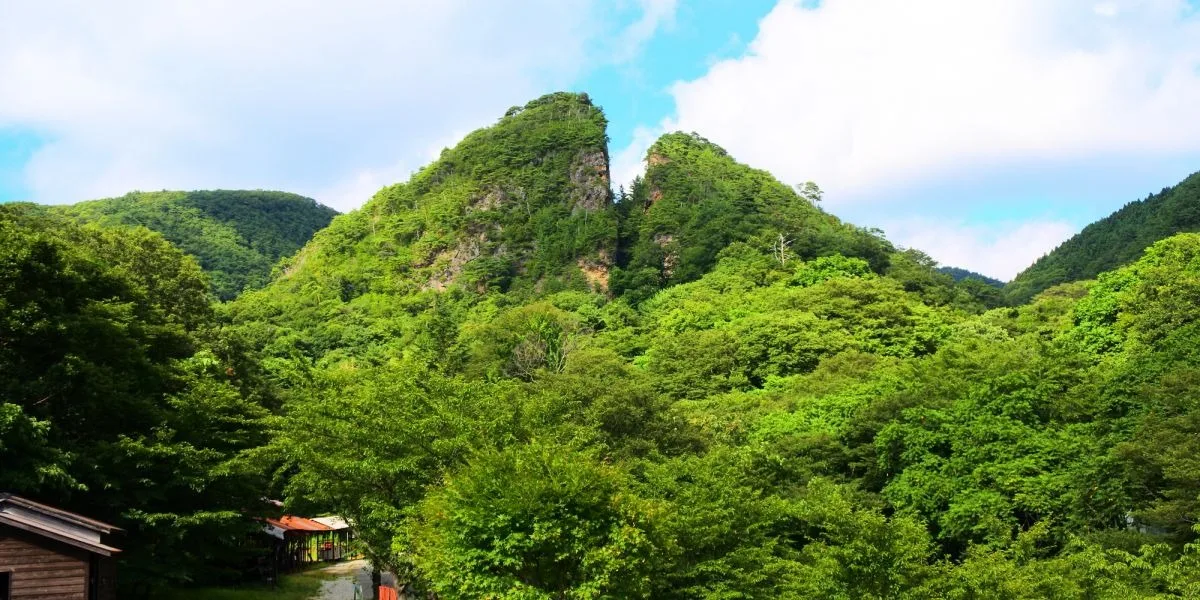
A picture of the Doyu-no-warito Opencut Site, formed by surface mining, where gold and silver veins exposed at the surface were directly extracted.
Their development drew many people to Sado, including miners. This influx helped traditional performing arts like Noh theater and folk performances such as ondeko drumming and lion dances to thrive, while additional terraced rice fields were cultivated to feed the growing population.
Historic Site Sado Gold Mine
- Address: 1305, Shimo-Aikawa, Sado-shi, Niigata
- Access: Approximately 50 minutes by car from Sado Kisen “Ryotsu Port” or a short walk from the “Sado Gold Mine” bus stop (Hon-sen Line, Nanaura-kaigan Line)
- Phone: 0259-74-2389
- Hours: 8:00 am – 5:30 pm (April – October), 8:30 am – 5:00 pm (November – March)
- Closed: Open year-round
- Price: Sado Gold Mine Course: Adults – 1,500 JPY, Elementary students – 750 JPY
- Parking: 500 passenger car spaces, 23 large bus spaces
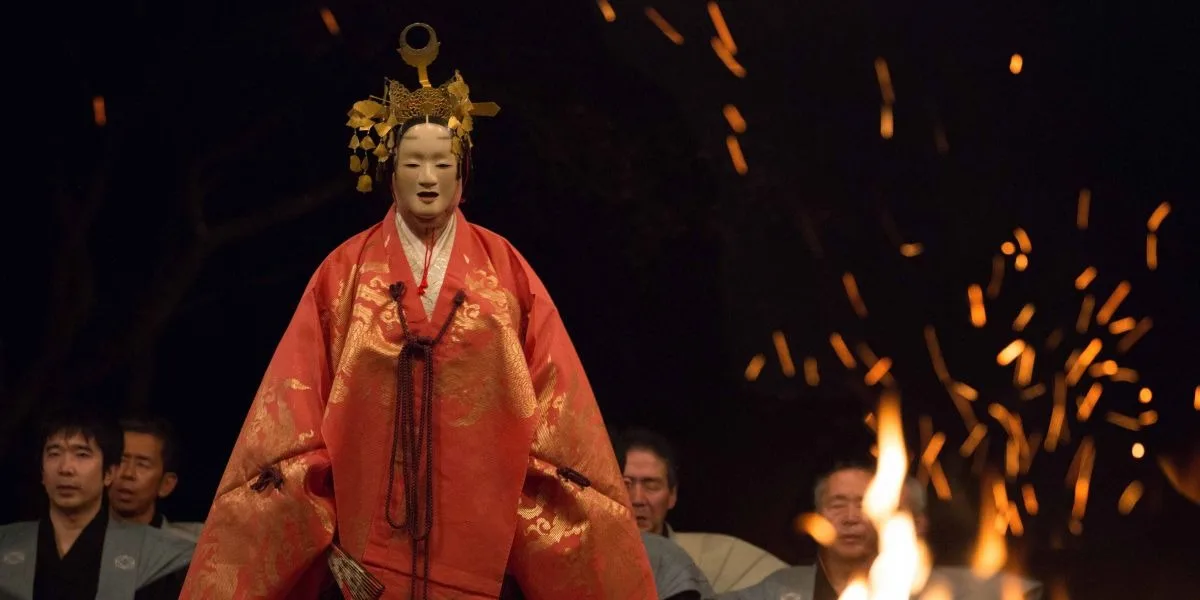
Firelit Noh Play (Takigi Noh): A Spellbinding Stage Art by Flickering Firelight
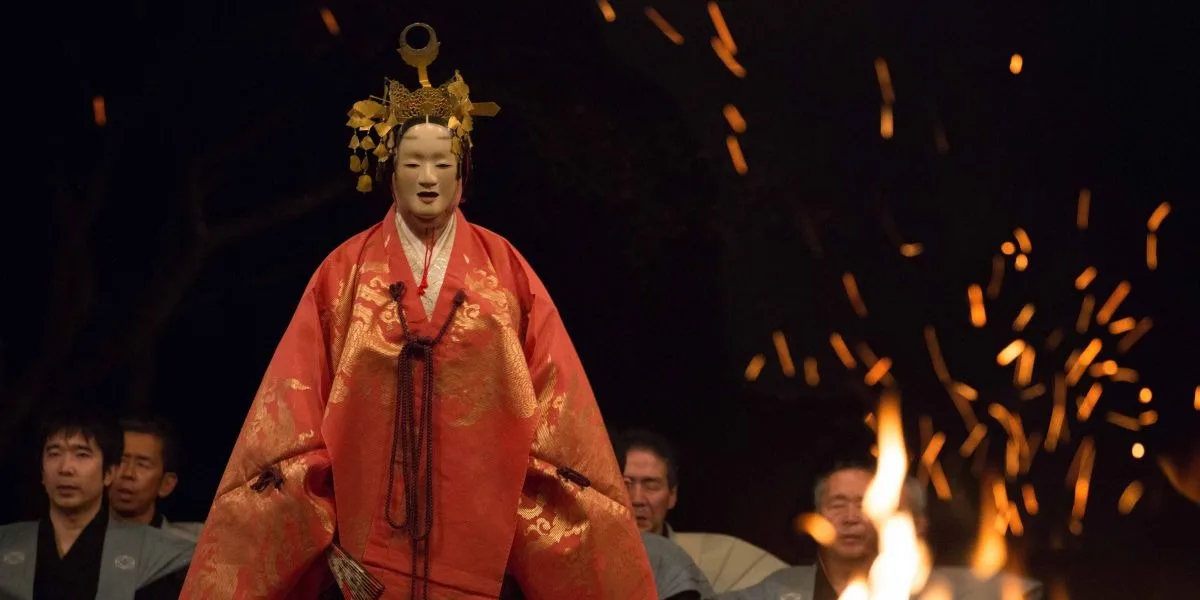
Photo: Hideko Saito
Noh, one of Japan’s most treasured traditional performing arts, is also one of the world’s oldest integrated stage arts, dating back to the 14th century. Its roots lie in “sangaku”, a form of an entertainment brought from China in the 8th century, which were later shaped by ancient Japanese folk performing arts and court culture.
Performed with vocal music (utai) and instrumental accompaniment (hayashi), Noh is distinguished by its masks (nomen), elaborate costumes, and subtle emotional expression conveyed through highly stylized, minimalist movements. In 2008, it was designated a UNESCO Intangible Cultural Property.
Noh was introduced to Sado Island – the place of exile for Zeami, the great Noh master – in the early 17th century, when Sado, home to rich gold and silver mines, came under the direct control of the Tokugawa Shogunate. In 1603, the Sado magistrate, Okubo Nagayasu, reportedly brought Noh performers to the island. Originally considered as a kind of samurai art, Noh on Sado evolved into shrine ritual performances and eventually became popular entertainment for commoners.
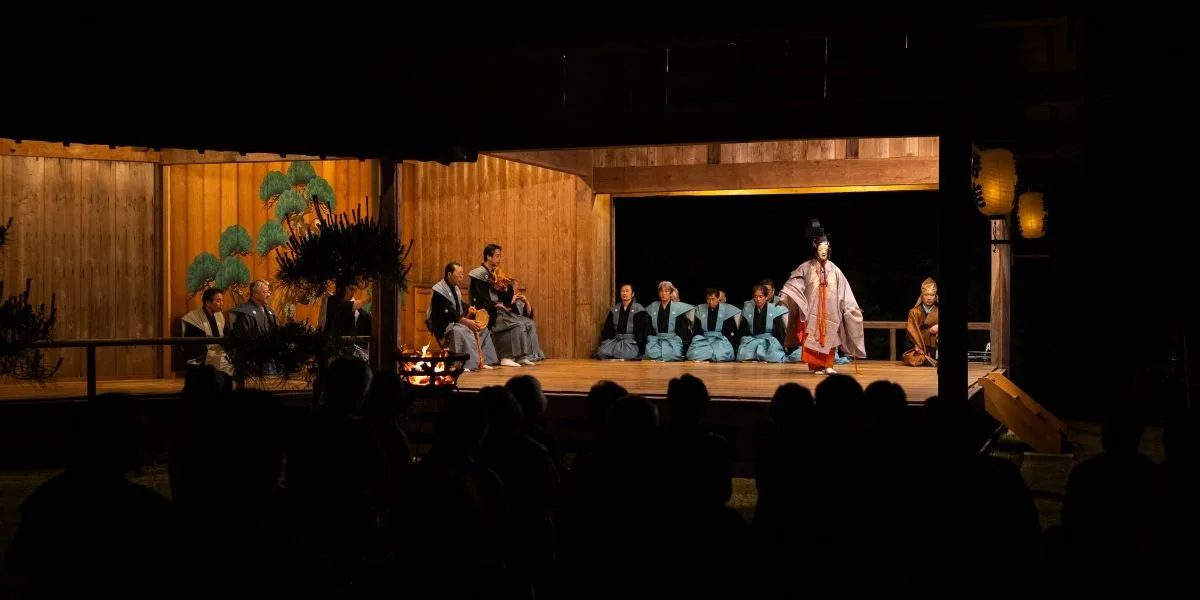
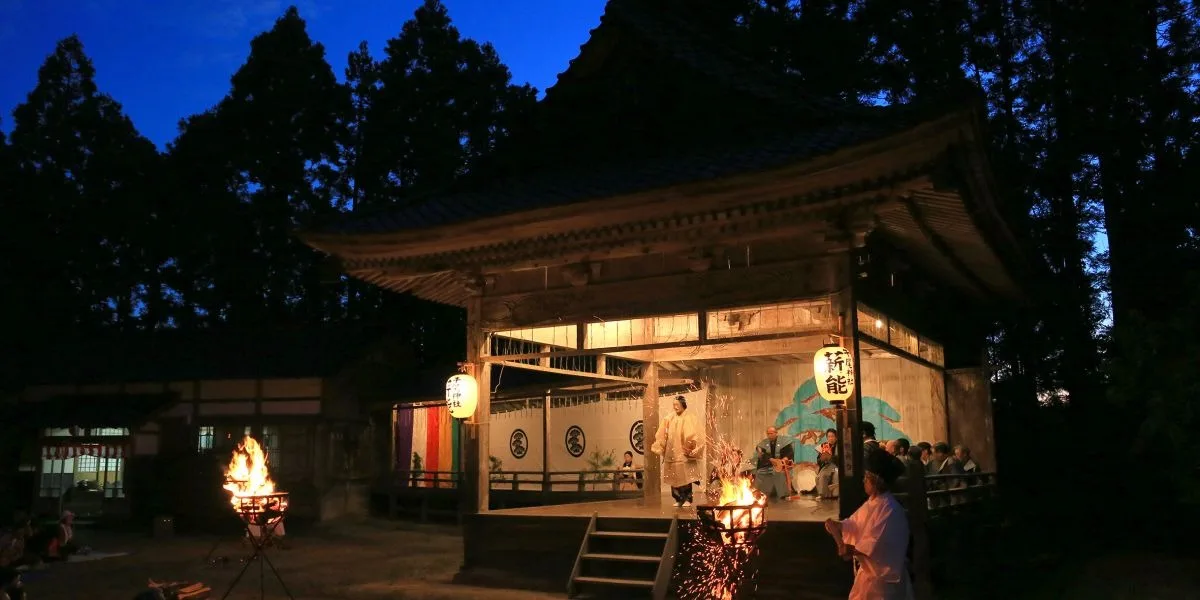
Today, Sado is home to more than 30 Noh stages, most of them located within shrine grounds. Audience seating is outdoors, and nighttime performances take the form of Firelit Noh play (Takigi Noh), beautifully illuminated by firelight.
From April to October, visitors can enjoy Noh at different venues across the island, with June celebrated as “Noh Month,” when Takigi Noh performances are held weekly.
In Takigi Noh, the mystical torchlit stage blends with the glow of stars and moonlight, the crackle of fire swaying in the breeze, and the soft chorus of insects – merging with the natural surroundings to heighten the profound beauty of the performance.
Why not experience Noh on Sado’s stages where history and nature converge?
*For performance schedules, please check the official Sado City tourism information site, “Sado Tourism Navi.”
Ondeko: A Sado Folk Performing Art for Driving Away Evil in the Village
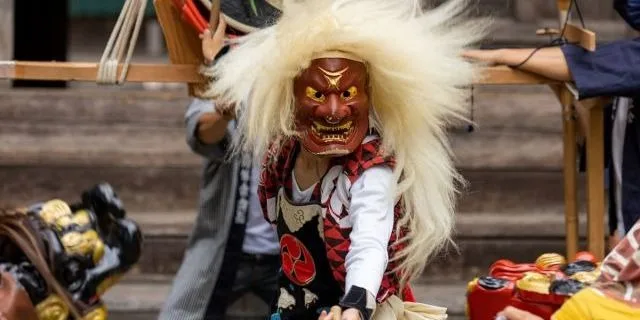
“Ondeko” is a folk performing art handed down across Sado Island, where dancers wearing demon masks dance to the beat of drums to drive away evil and pray for good harvests, plentiful catches, and household safety. It is performed at festivals in many parts of the island. Though its origins remain unclear, it appeared in the late 18th-century drawing “Quarterly journal of Aikawa,” showing it was already established by then. Today, around 120 ondeko performance groups exist on Sado, each with its own unique style and character – making it especially appealing since you can experience so many different expressions of the same performance art.
Every May, the annual “Sadokoku Ondeko Dot-com” event takes place at the Ondeko Dome in Ryotsu Port Central Park. This popular festival brings together ondeko groups from across the island along with those who practice other Sado folk performing arts, such as Sado Okesa. Around 25 groups perform each year, giving visitors the rare chance to enjoy many different styles of ondeko in one place – something not usually possible since the dances are often tied to local shrine rituals. Food stalls featuring Sado specialties, from fresh seafood caught off the coast to locally brewed sake, add even more flavor to the event.
Sadokoku Ondeko Dot-com
- Venue: Ondeko Dome, Ryotsu Port Central Park
- Address: 138, Ryotsu Port, Sado-shi, Niigata
- Date: Every May
Tatakokan - Founded by Kodo to Bring Taiko to the World Stage
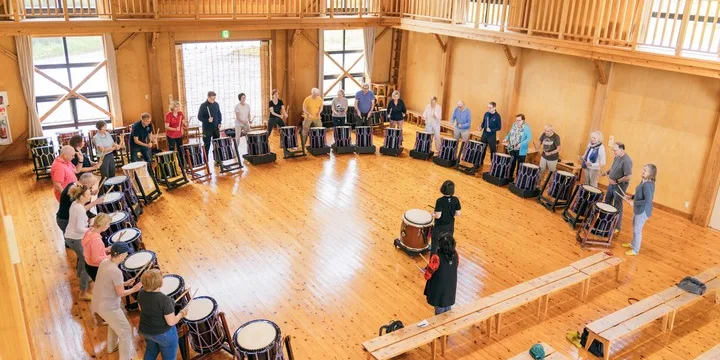
Tatakokan, operated by Kodo and managed by the Kodo Cultural Foundation, is a wooden hall built with an extensive amount of locally sourced Sado timber. It has excellent acoustics and an open layout. Here, visitors can try a variety of programs, including taiko drumming experiences and concerts, giving them an enjoyable way to explore the profound world of taiko. The hall also houses a large taiko drum made from 600-year-old zelkova wood – don’t miss the chance to play it to hear what sound it makes!
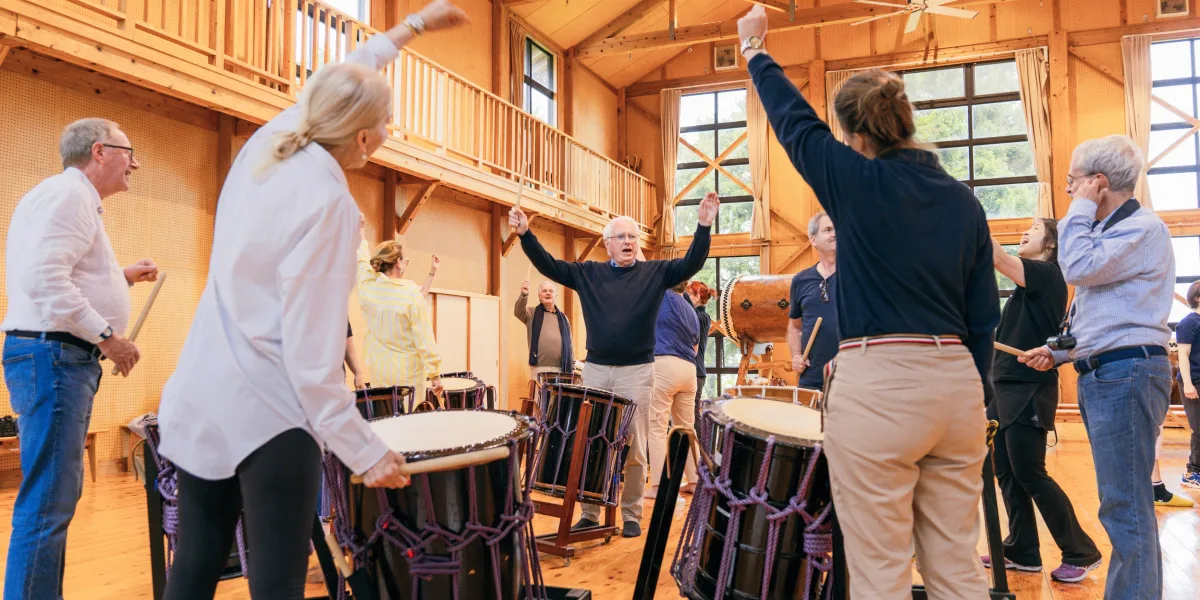
With full English support, it provides an ideal space for cultural exchange, allowing beginners and international visitors to join in with confidence.
Tatakokan (Sado Island Taiko Centre)
- Address: 150-3, Ogi Kaneta Shinden, Sado-shi, Niigata
- Access: Approximately 10 minutes by car from Sado Kisen “Ogi Port”
- Phone: 0259-86-2320
- Hours: 9:00 am – 5:00 pm
- Closed: Mondays (if Monday is a national holiday, closed the following Tuesday), year-end and New Year holidays, winter (December – February)
- Price: Taiko Experience (60 minutes) – Junior high students and older: 3,000 JPY, Elementary students: 2,000 JPY, Preschoolers: 1,000 JPY each from the second child
- Parking: 25 passenger car spaces, 4 large bus spaces
Uto Shrine’s Aikawa Festival - A Village Celebration with 400 Years of History
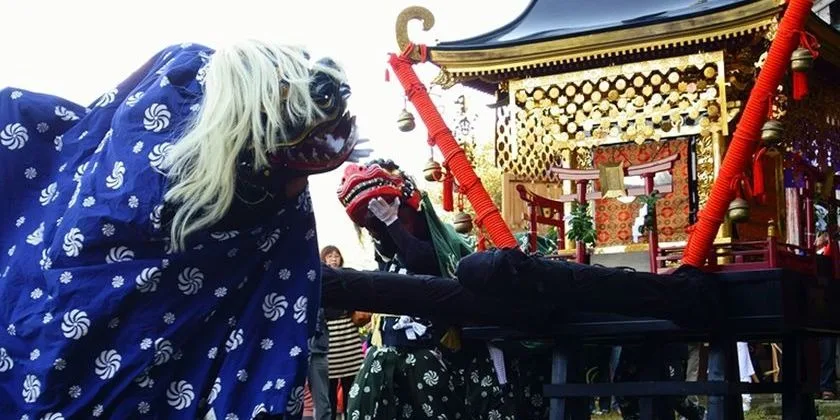
The festival’s highlights include an impressive portable shrine procession and ondeko performances. After the ritual ceremony at the shrine, bearers carry the roughly 650 kg portable shrine through the town to spirited chants, while taiko groups, lion dancers, and bean throwers perform from door to door throughout the community. Around 10 PM, when the portable shrine returns in the evening procession, lanterns cast a mystical glow, offering a magical contrast to the lively daytime festivities.
This festival provides a unique, immersive way to experience Sado’s history and culture, making it a must-see event.
Aikawa Festival
- Venue: Uto Shrine
- Address: Orito-mura, Aikawa, Sado-shi, Niigata
- Date: October 19
Sado Island's Satoyama Landscape - Where Terraced Rice Fields and Crested Ibis Coexist
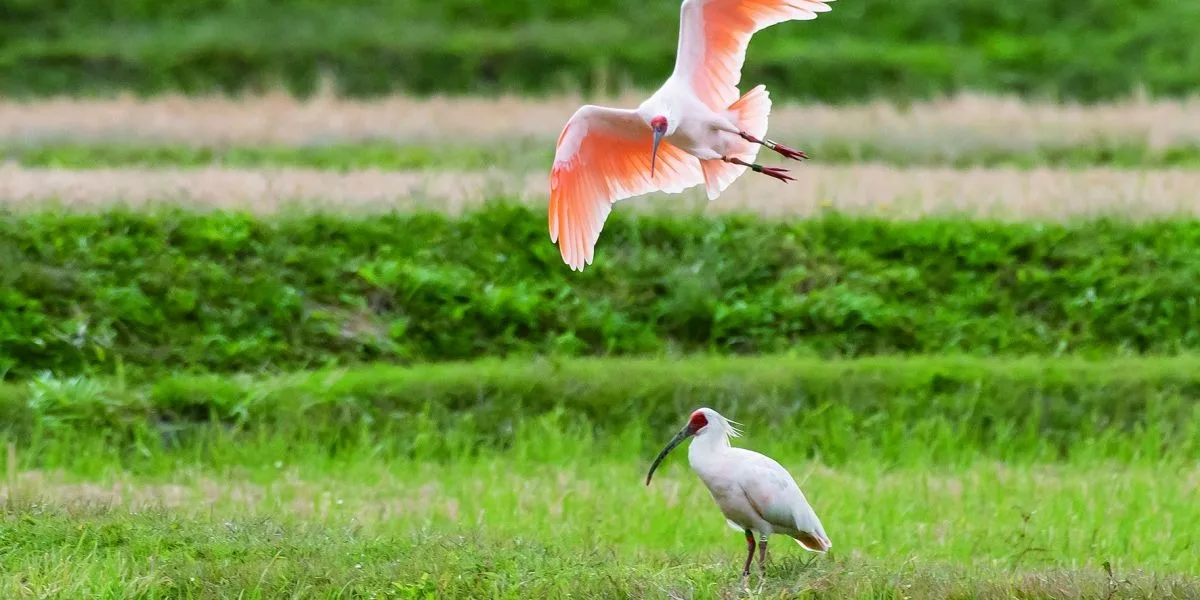
A key aspect of Sado’s rice fields is their coexistence with the crested ibis (toki). The fields provide essential feeding habitats for the birds, reflecting the island’s long tradition of environmentally friendly agriculture, where human activity and nature exist in harmony. In 2011, this approach was recognized by the United Nations Food and Agriculture Organization (FAO) as a Globally Important Agricultural Heritage System (GIAHS) under the title “Sado’s Satoyama in Harmony with Japanese Crested Ibis.”
Nurtured by this rich natural environment, Sado Island is a treasure trove of fresh ingredients – from vegetables and fruits to meat and rice. Its diverse culinary culture, shaped by the blending of Eastern and Western influences, adds yet another layer to the island’s unique charm.
Shukunegi - A Village Preserving the Legacy of Great Shipwrights and Vessels
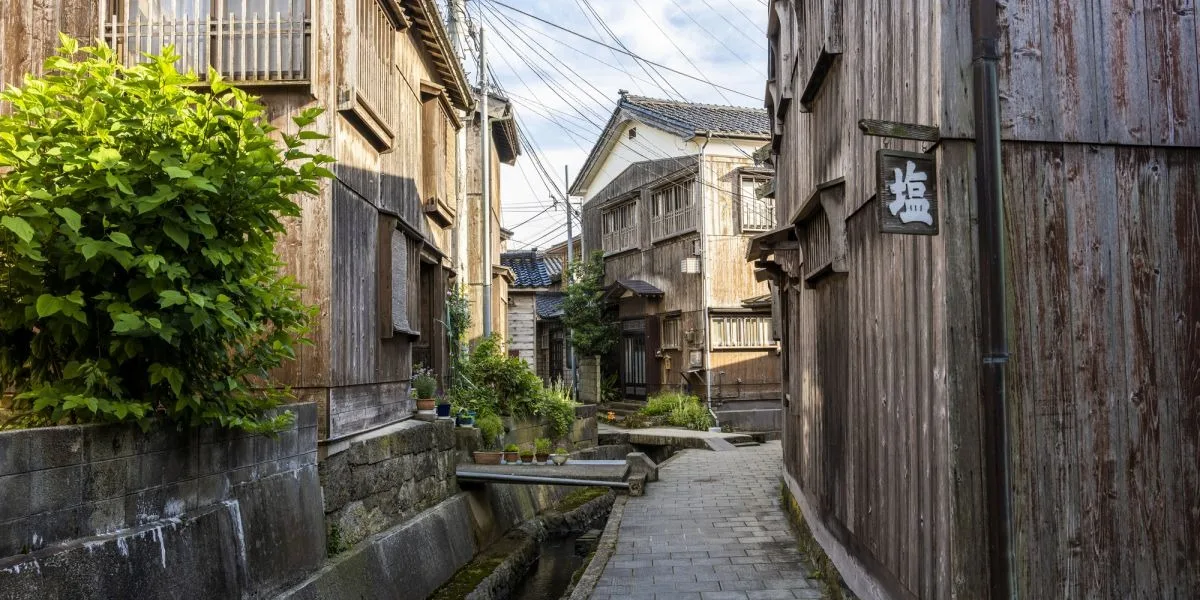
Today, three houses are open to the public, including a shipwright’s home and a ship owner’s residence built in the early 19th century, offering a glimpse into the daily life and exceptional craftsmanship of the shipbuilders of that era.
Shukunegi
- Address: Shukunegi, Sado-shi, Niigata
- Access: Approximately 10 minutes by car from Sado Kisen “Ogi Port”
- Parking: 20 spaces
Sado Island is a cultural treasure island where nature, history, and performing arts resonate richly together. A journey to explore the traditions that flourish here will surely stimulate your senses and help you rediscover the profound depth of Japanese culture.