

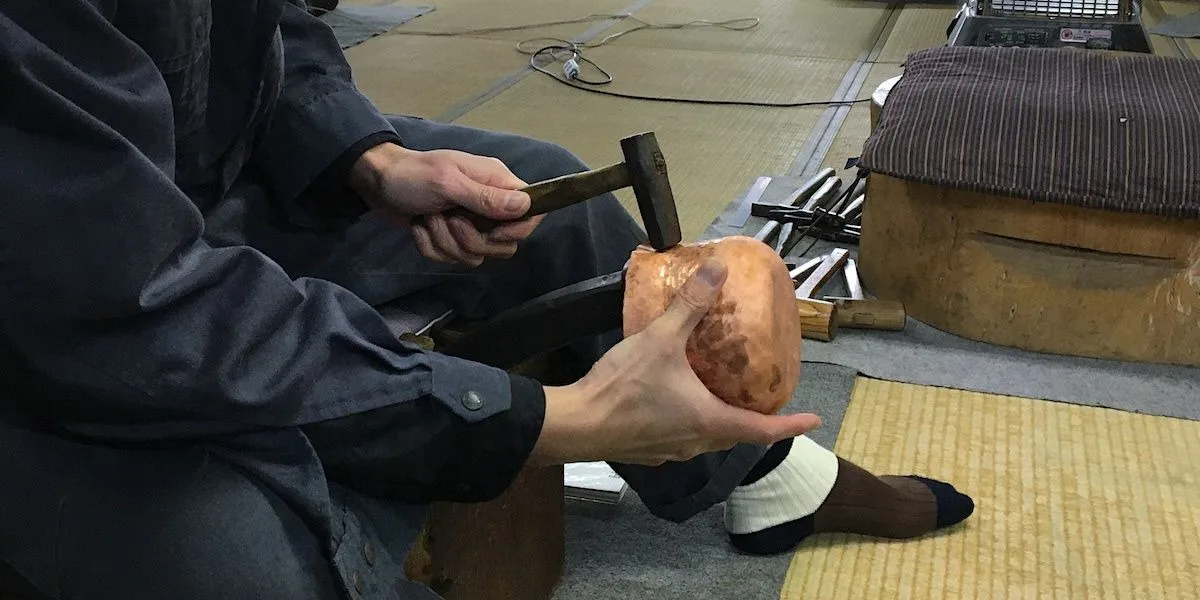


The city became known for its copperware through a series of fortunate and unfortunate events. The Tsubame-Sanjo area was prone to flooding from the Shinano River, making farming unpredictable. Since growing rice was a major part of the economy at the time, Tsubame-Sanjo had to find other ways to make ends meet. So, residents of the area started crafting nails for buildings. When copper was found in nearby Mount Yahiko, it opened up a whole new world of metalwork in Tsubame. The same river that flooded the fields became their way to transport the heavy copper to town where it could be formed into beautiful, lasting pieces.
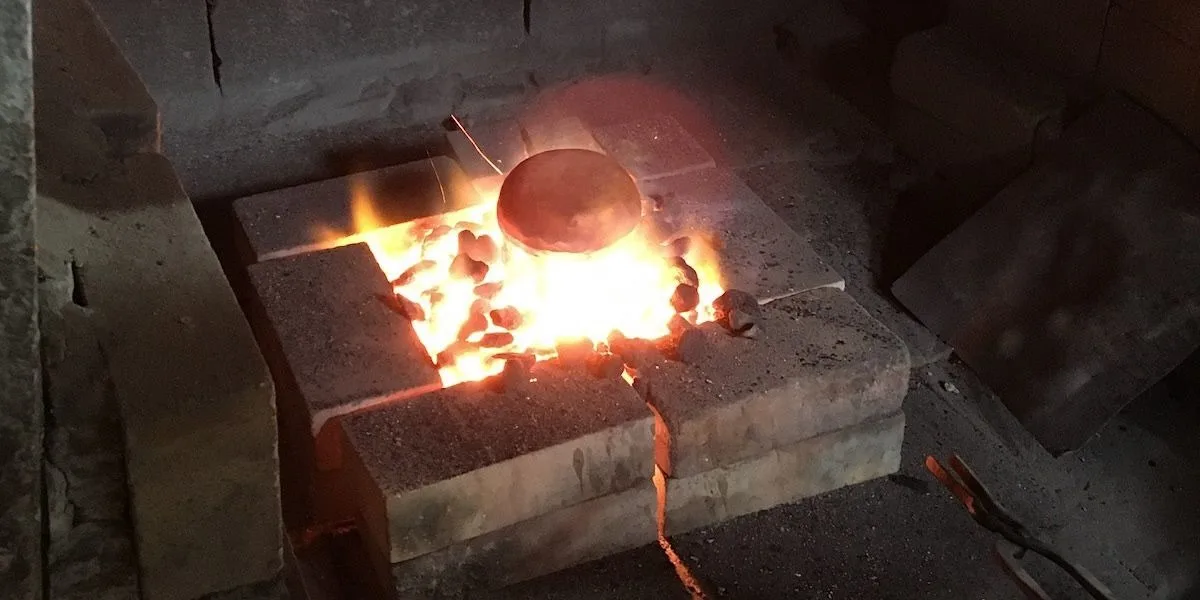
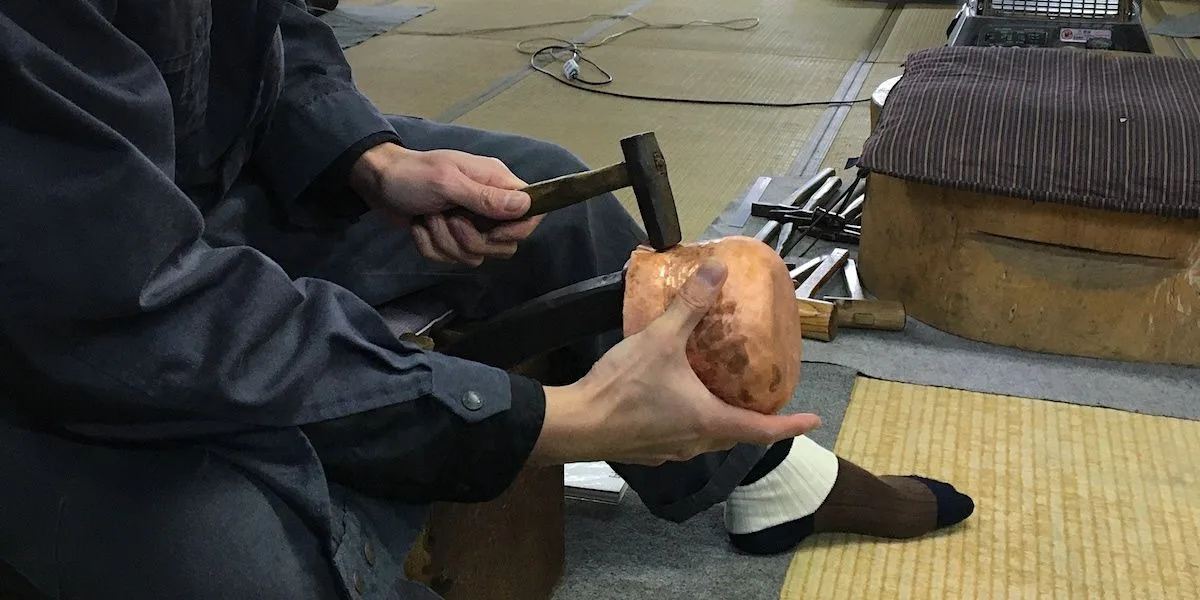
Often when we think about metalwork, we imagine heating metal until it’s bright red, then hammering it until it cools down and becomes hard again. Repeat this over and over, and you can get all kinds of useful tools from pans to swords. But the copperware artisans at Gyokusendo use a completely different process. Copper is soft enough at room temperature for artisans to shape with a hammer, becoming harder the longer they work with it. When the dull thud of hammer against metal changes to a high ping, the artisans know that the metal has reached its limit. It’s then that the piece goes into the fire to undergo a process known as annealing.
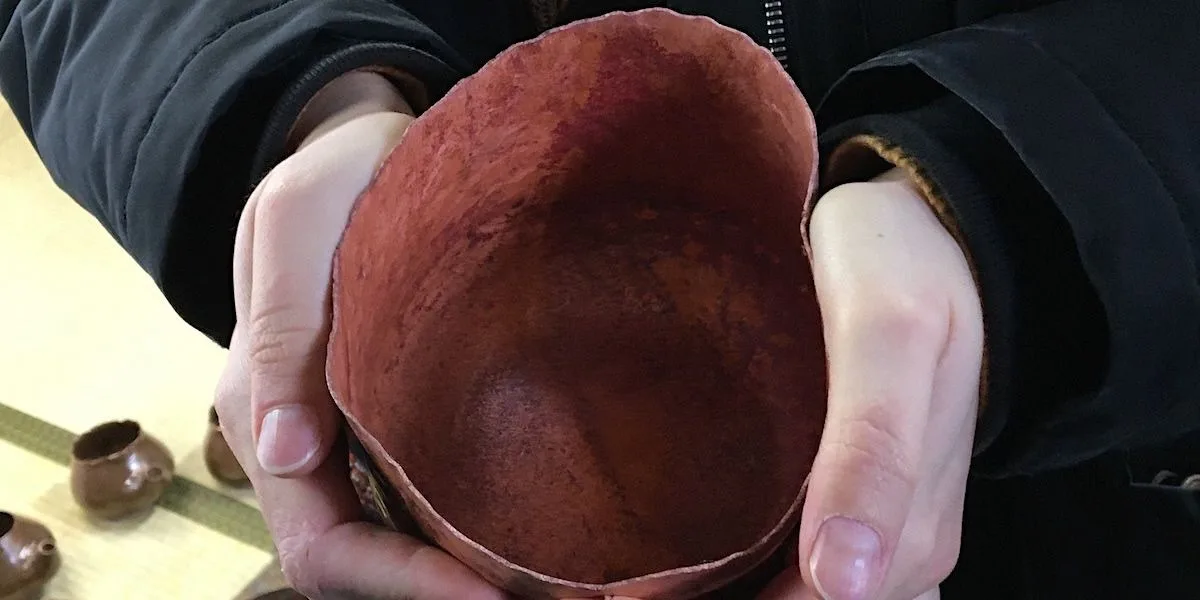
Annealing is the key to making sturdy copperware that will last you a lifetime, and your grandchildren too. Unlike other metals, while fire does soften copper, it doesn’t need to stay hot to stay malleable. This results in some wild experiences, like being able to easily bend a previously solid pot with your bare hands right out of the fire.
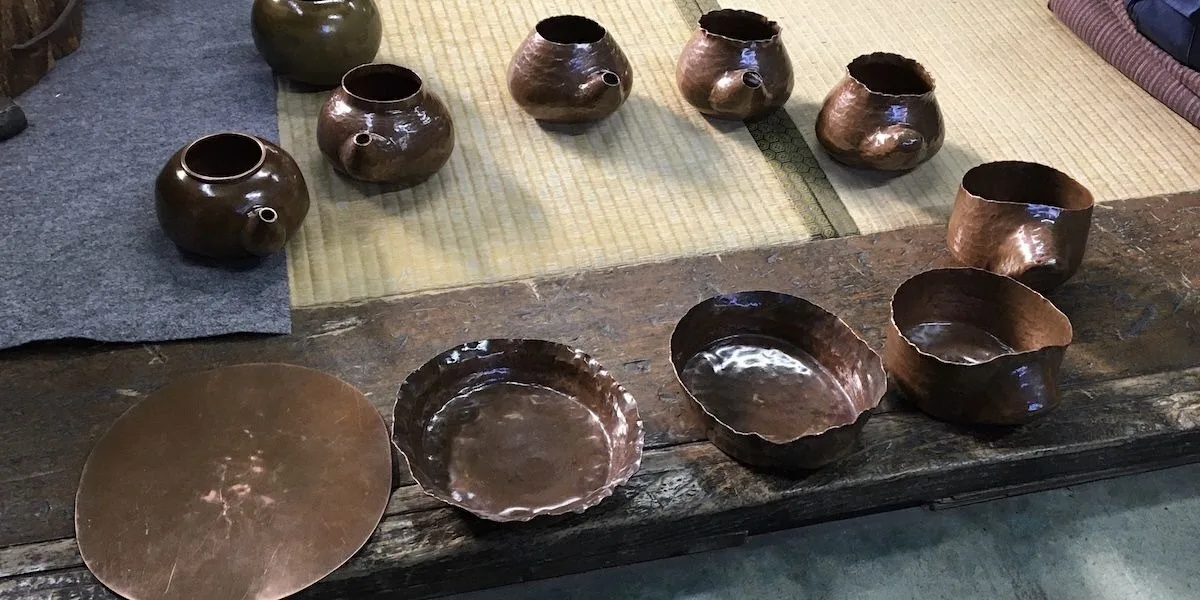
That’s because this process physically and chemically changes the metal so it regains its softness. Then, the artisan can continue to work with the piece until it’s once again too hard, compressing the copper more and more each time. At Gyokusendo, pieces often go through this cycle 15 times before reaching their finished state. The examples of each stage that are displayed in the workshop show just how much work goes into each piece.
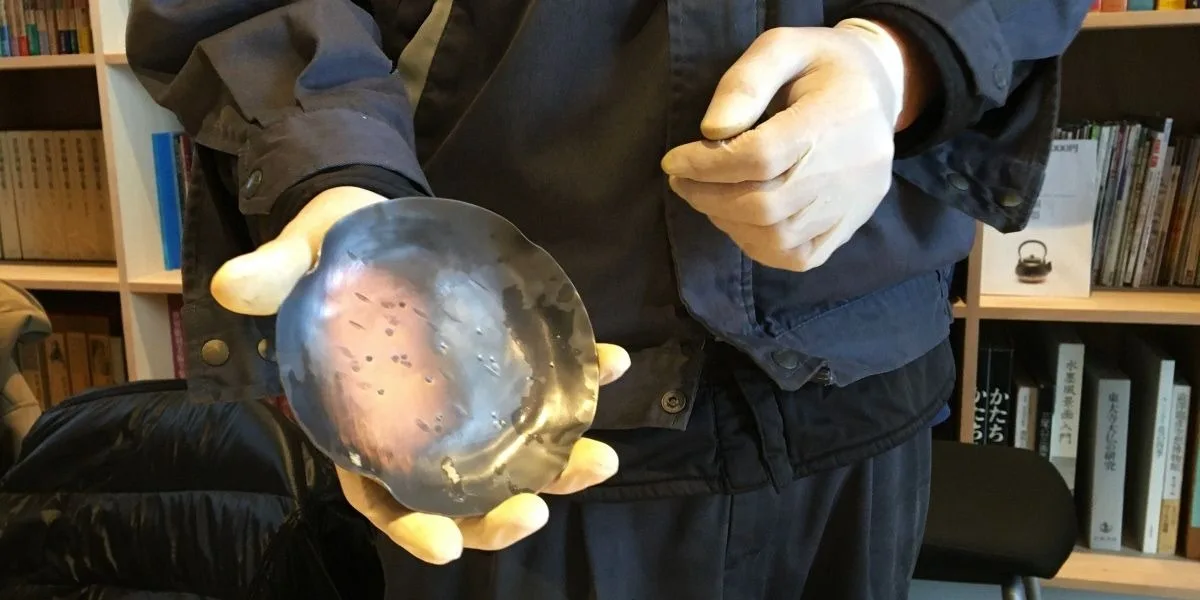
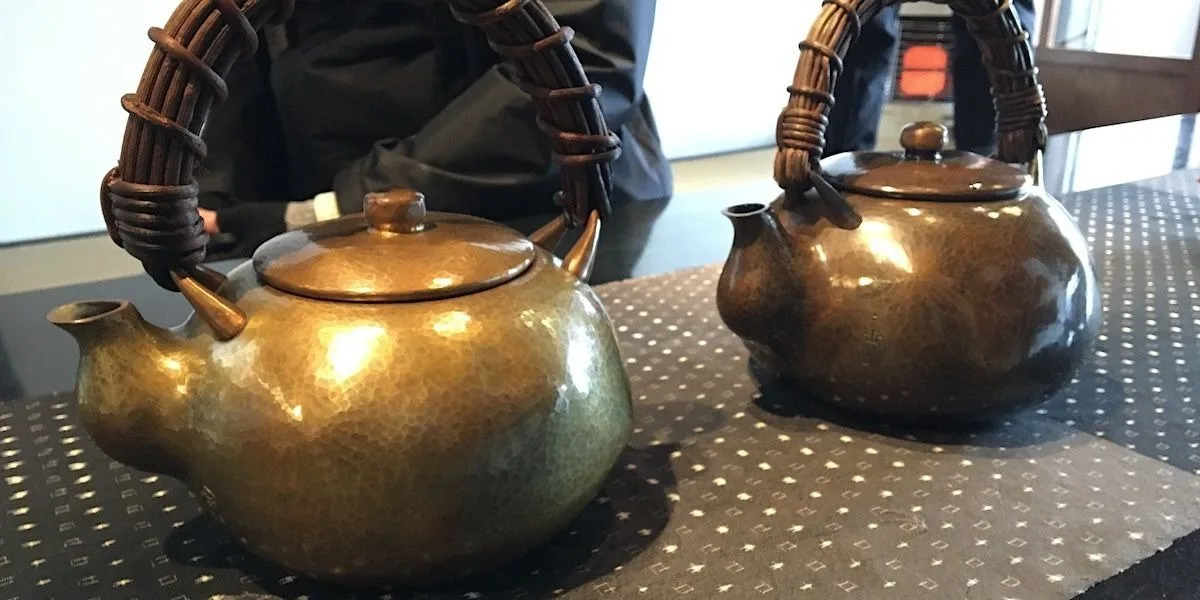
The best part about copperware, though, is the impact you can leave on it. At Gyokusendo, their philosophy is that copperware will “continue to grow more unique by the touch of the hands that use it.” By using your copperware piece regularly, your touch can affect it as much as an artisan’s can. The difference is visible in the picture below where the pot on the right is many years older than the one on the left. Thus, a piece of copperware will always become a unique product polished by your care and attention.
Unfortunately, like many crafts in Japan, Tsubame’s copperware industry is struggling. As crafting techniques used to be passed from father to son, Japan’s declining birth rate has affected these businesses along with automation. In some cases, families have chosen to teach their daughters these skills as well, while others have turned outward to find people willing to learn. However, apprentices don’t earn much–sometimes not more than food and board–and they must dedicate themselves to the craft for upwards of 10 years before they can sell their creations. Between the low pay and long hours, the path of the artisan is not as attractive to many people.
However, Gyokusendo is trying to change that by offering their apprentices a salary. Doing so will hopefully incentivize more people to consider the artisan’s path and keep the industry alive for years to come. One apprentice at the workshop is in his 30s, having left his former job to begin this journey later in life. It’s hard to imagine someone quitting an established career to dedicate themselves to a craft they won’t make money from for years, but with this new change, that might become more common.
The history of copperware is baked into the Tsubame area. These pretty pieces might cost a pretty penny, but learning how they’re made is a priceless experience. Many places in Tsubame have made it easy and accessible for people to check out their workshops, and sometimes try the crafts themselves. If you ever want a glimpse of the hard work that goes into copperware, Tsubame is the place to be. You can check out the different workshops and then take the Yahiko line all the way to the end to see the mountain that started it all.
Sources:
(only Gyokusendo’s website is quoted, but I used the others for more research)
https://www.npr.org/2022/07/29/1114222052/japan-traditional-crafts-small-business-population-decline
https://www.bbc.com/worklife/article/20200219-the-future-of-japans-master-artisans
Pursuing a Traditional Japanese Apprenticeship in the Reiwa Era