Stretching from the Sea of Japan to the base of Mt. Myoko, Joetsu and Myoko are regions where samurai history, fermentation culture, and snow country living are deeply intertwined. Heavy snowfall, fertile landscapes, and a long period of human settlement have shaped magnificent shrines and castles, brewing traditions refined by cold, and quirky townscapes designed to withstand harsh winter conditions. Snow-blanketed turrets, candlelit winter paths, and sake, wine, and fermented flavors born of the climate all reveal a snow country way of life marked by quiet depth and resilience.
Day 1
Day 2
START
Joetsu Myoko Station
(Rent a car near Joetsumyoko Station on the Joetsu Shinkansen line)
About a 25-minute drive from Joetsumyoko Station.
1
Kasugayama Shrine
History and nature meet in quiet harmony
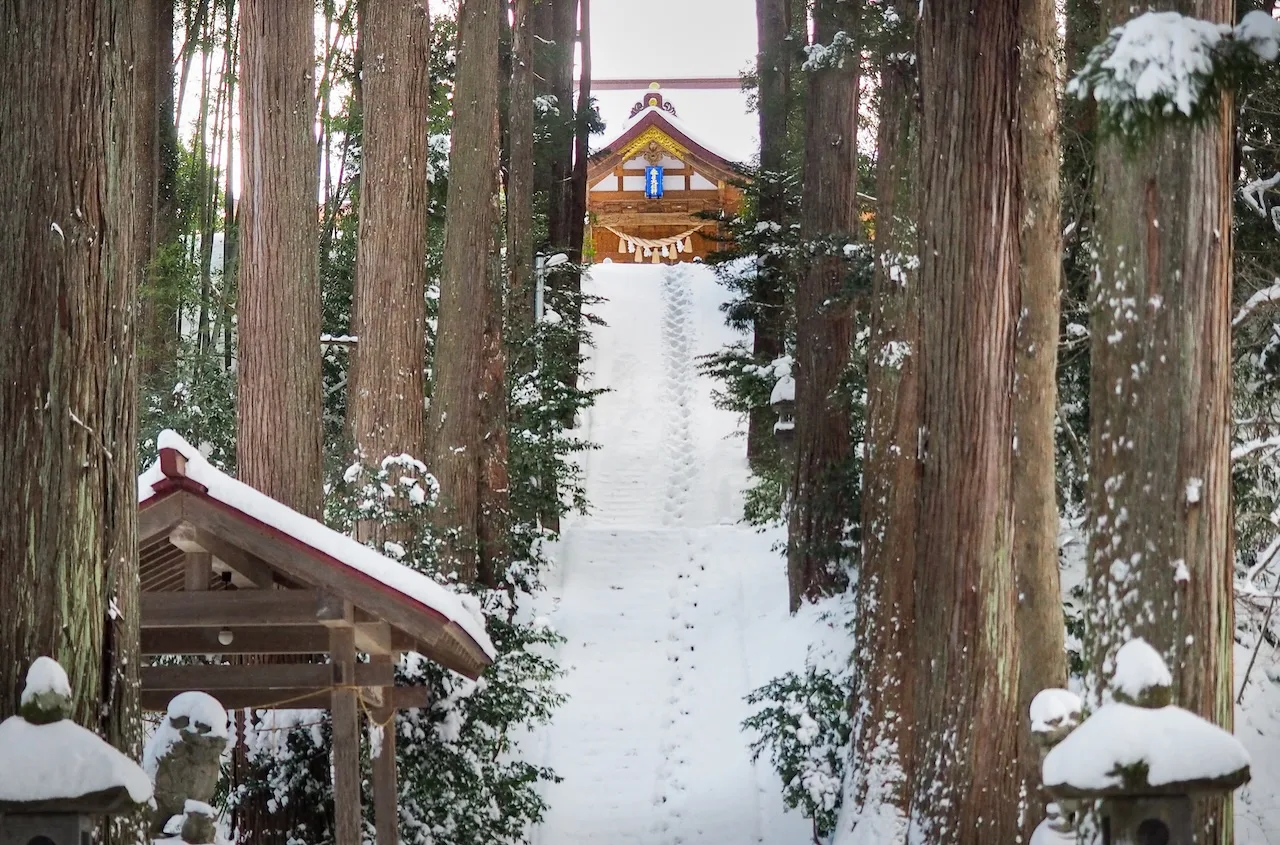
A branch of the Uesugi Shrine in Yonezawa, Yamagata Prefecture, Kasugayama Shrine enshrines Uesugi Kenshin (a famous Daimyo lord). It was built in 1901 by Sumiharu Ogawa, father of children's book author Mimei Ogawa. He is said to have received assistance from Baron Maejima Hisoka, father of Japan's modern postal system.
The spectacular pavilion has a straight and solid design, and the nearby Kasugayama Shrine Memorial Hall exhibits articles and documents from Uesugi Kenshin.
In autumn, the maples and other varieties turn red and yellow around the ruins of Kasugayama Castle and Kasugayama Shrine. Our insider tip is to visit the grounds of the shrine when it is cast in a gorgeous shawl of fallen leaves. Another spectacular sight is the stand of gingko trees around the Ninomaru part of the castle site.
In winter, Kasugayama Shrine presents an even more serene and solemn landscape blanketed in snow. The shrine building, peaking out from the top of the hill amidst the tall, silvery forest, exudes a dignified atmosphere befitting the memory of esteemed lord Uesugi Kenshin. Amid the crisp air and snowy scenery, one can enjoy a silent moment as nature and history unfold around you.
Address
新潟県上越市大豆1743
Telephone Number
025-525-2010
Opening Times
9:30 am - 4:30 pm
(Kasugayama Shrine Memorial Hall)
A tribute to the “Sake Doctor” and snow-country fermentation culture
The Joetsu Sakaguchi Memorial celebrates the life and work of Dr. Kinichiro Sakaguchi, a renowned applied microbiologist also known as the “Sake Doctor.” The museum showcases his personal effects and achievements, along with traditional sake-brewing songs and tools, presenting a unique glimpse into Joetsu's fermentation culture.
Built around the former Sakaguchi family home in Kubiki Village, the museum truly reflects the weight of its history. Visitors can explore Dr. Sakaguchi’s elegant recreated study, the snow-camellia flowers he adored, and Rushuntei, where he mixed with cultural figures and brewers.
For a unique treat, try tasting Usaki sake, linked to Dr. Sakaguchi. In 1935, he collected black koji from an Okinawan brewery; later helping revive the region’s traditional awamori after the strain was lost during WWII.
The museum is closed December through February.
Address
新潟県上越市頸城区鵜ノ木148
Telephone Number
025-530-3100
Opening Times
10:00 am - 4:00 pm
About a 20-minute drive.
3
Iwanohara Vineyard
The wines of Joetsu — A legacy rooted in snow and vines
In 1890, in the snowbound land of Joetsu, visionary founder Zenbei Kawakami—revered as the Father of Japanese Wine Grapes—planted the first vines that would shape the history of winemaking in Japan. That same year, he opened Iwanohara Vineyard.
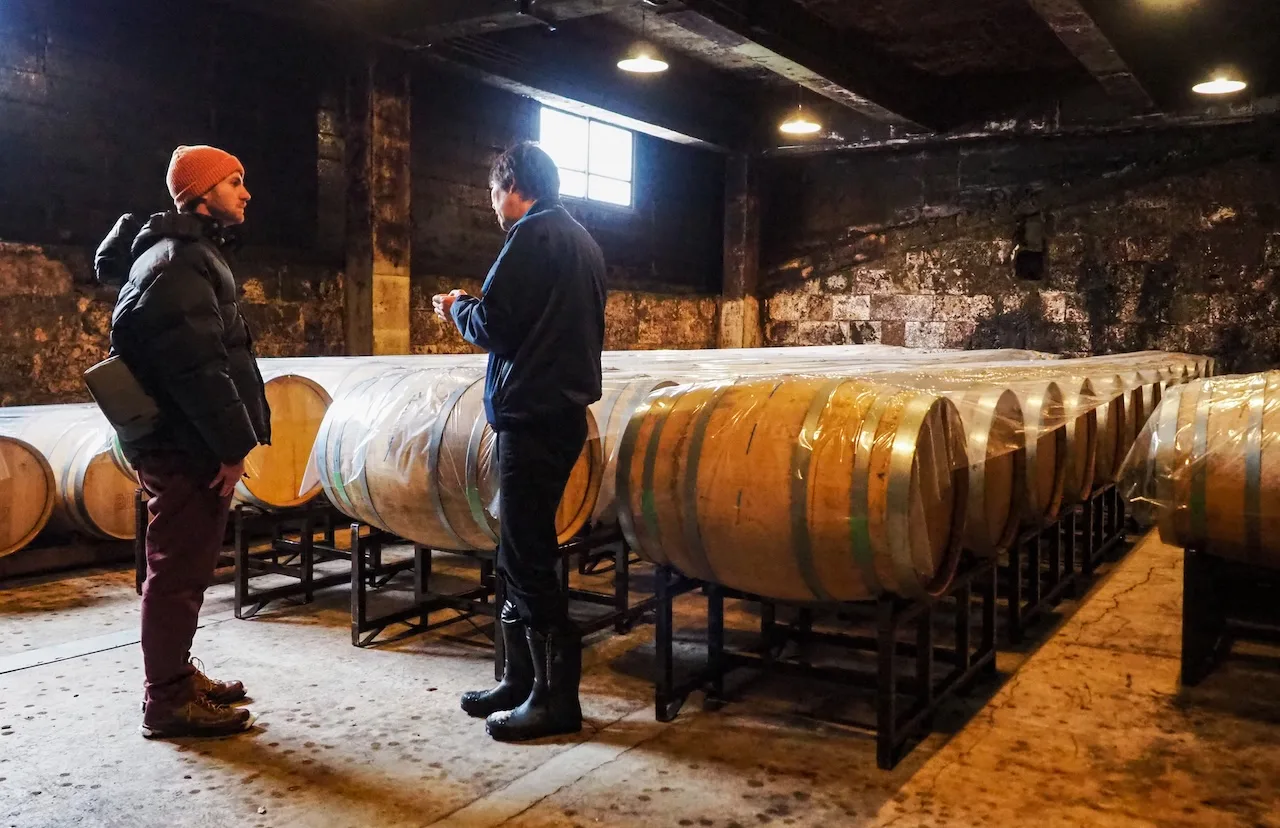
Inspired by the traditional cold brewing method of sake, he developed low-temperature fermentation and aging techniques using snow cellars. Even today, this environmentally conscious, snow country-style winemaking continues, and visitors can enjoy tours of the sprawling vineyards, atmospheric historical stone-walled cellars, and the snow cellar, as well as join tasting experiences and purchase wine on-site.
For over a century, his legacy has been nurtured through generations, producing wines of refined character and enduring elegance. Today, the same unwavering passion for excellence continues; an unbroken tradition from vineyard to glass.
Address
新潟県上越市北方1223
Telephone Number
025-528-4002
Opening Times
Wine Shop
9:30 am - 4:30 pm
Winery Tour
9:30 am - 4:00 pm
*Please inquire via e-mail or phone for more information.
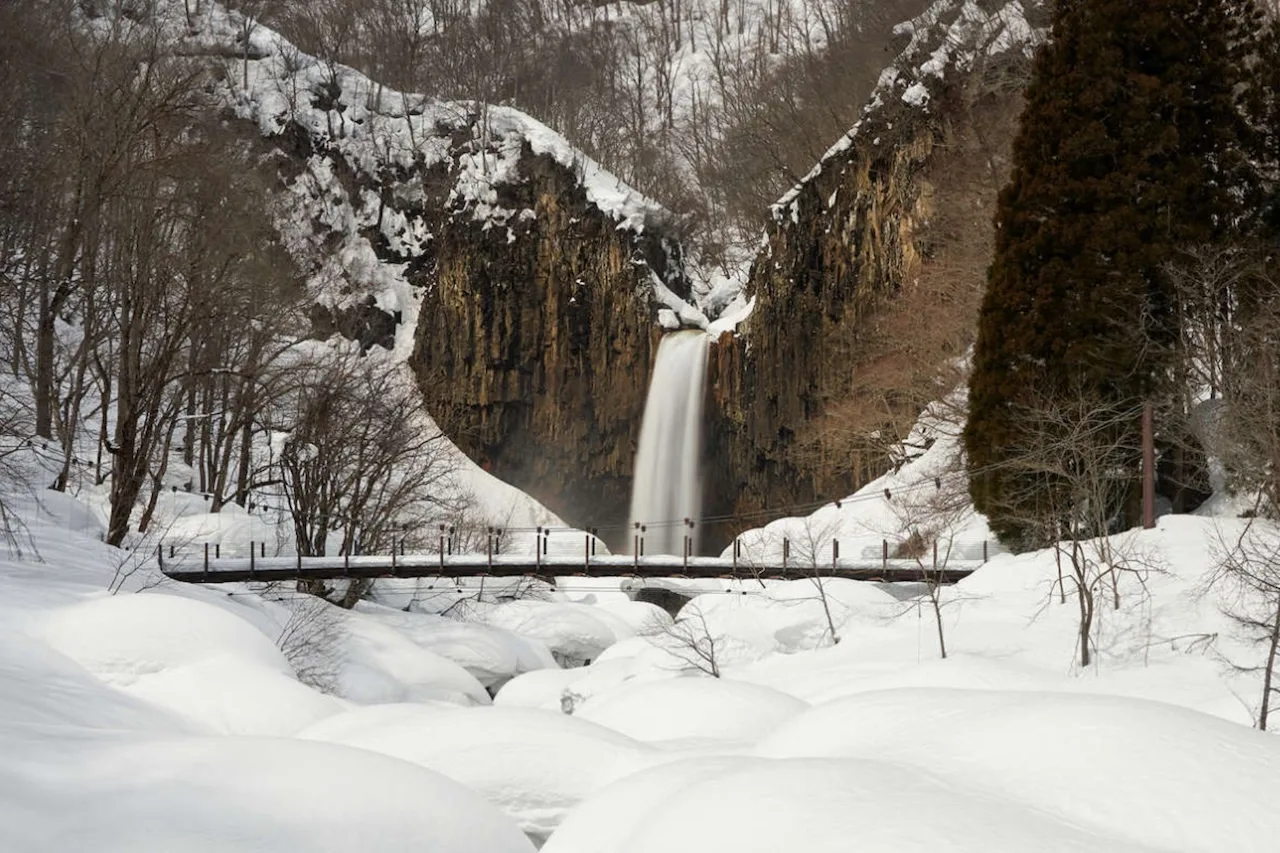
Naena Falls, one of Japan’s Top 100 Waterfalls, plunges 55 meters in a breathtaking rush of water and mist. It sits on the Sekigawa River, right on the border between Niigata and Nagano.
The falls present a unique kind of beauty each season. In spring, melting snow sends a dramatic surge of water over the cliff, while autumn draws visitors with the vibrant colors of the surrounding foliage. Summer is perfect for enjoying the cool spray on a warm day. In winter, the landscape is blanketed in snow, creating a magical scene where the roar of the falls forms a surreal contrast with the quiet snowy forest. While access is limited during heavy snowfall for safety, guided snowshoe tours let you experience the dramatic winter landscape up close.
Long ago, the waterfall’s roar was so fierce that it echoed through the forest like an earthquake, earning it the nickname “Earthquake Falls.”
It’s about a 15-minute walk from the parking area to the observation deck, where you can get close enough to feel the full force of the water. The falls are framed by striking basalt cliffs with neat columnar joints, while the trail above shows layered, plate-like lava formations called sheet joints.
Naena Falls is also the start and end point of the Myoko Kogen Nature Trail, designated as a forest therapy route. A stroll here promises stunning views and a soothing walk through nature.
Address
新潟県妙高市杉野沢
Telephone Number
0255-86-3911
(Myoko Tourism)
About a 15-minute drive.
GOAL
Akakura Onsen
A historic onsen village in a snowy mountain setting
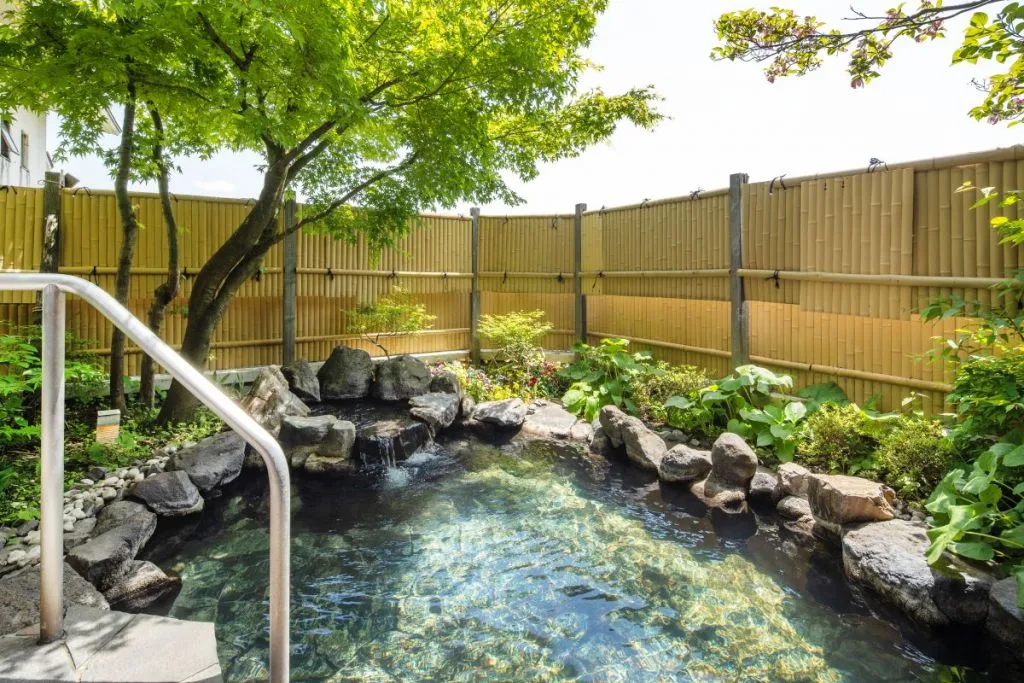
Founded by the ruling Takada Clan, the Akakura Onsen hot spring village has been welcoming holidaymakers at the foot of Mount Myoko since 1816. Its waters are naturally rich in sulfate and bicarbonate minerals, earning the nickname “double beauty bath” for their skin-softening and restorative effects. Drawn from the North Jigokudani area of the mountain, the springs produce around 5,000 tons of water daily, arriving at the perfect temperature without any need for artificial heating, cooling, or dilution.
In winter, snow blankets the town, and stepping into a steaming outdoor onsen as flakes drift around you is an ethereal experience. Traditional ryokan inns and hotels with baths, such as the famous Akakura Hotel, offer luxurious stays with fantastic meals, while numerous spots allow for more casual enjoyment. Even a simple footbath along the street feels special, the warmth of the water a welcome respite from the crisp mountain air.
Address
新潟県妙高市赤倉585-1(赤倉温泉観光協会)
Telephone Number
0255-87-2165
(Akakura Onsen Tourism Association)
START
Akakura Onsen
About a 30-minute drive.
1
Kanzuri
A gentle spice elevating Niigata’s snow-country food culture
For lovers of hot sauce, Niigata’s snow country spice is not to be missed. Known as kanzuri, this vivid red fermented chili paste has been a staple of Joetsu and Myoko for centuries. It is said that the origins date back to the Sengoku period, when the warlord Uesugi Kenshin brought precious chili peppers, introduced from Europe, to the region. Today, kanzuri is made from thick, locally grown peppers blended with koji, yuzu, and salt, giving it gentle heat with citrus notes.
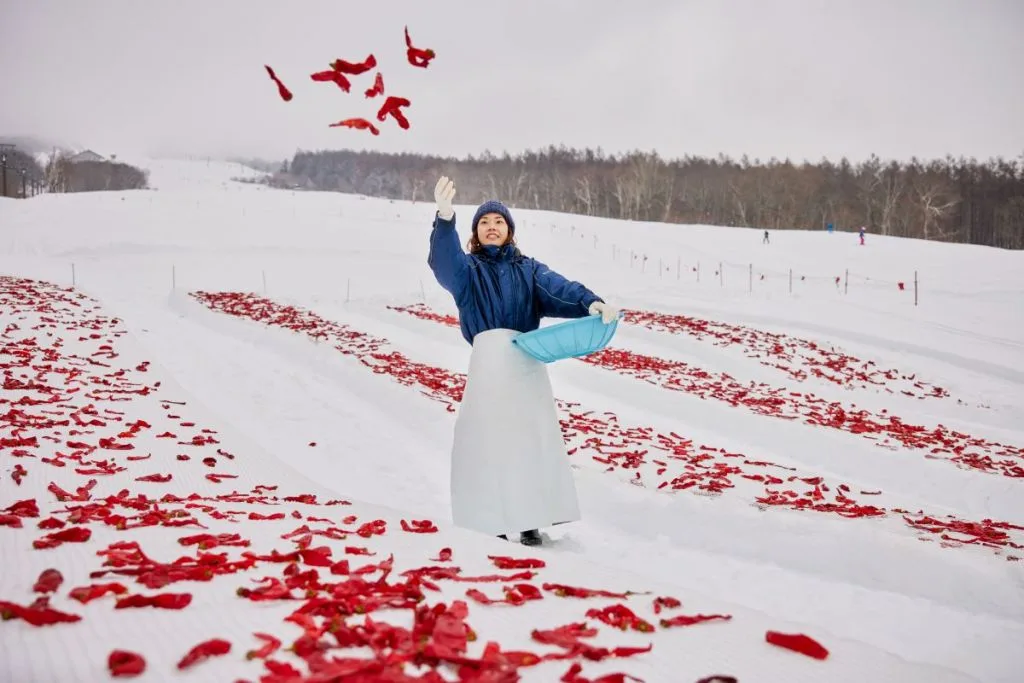
What sets kanzuri apart is its yuki-sarashi, or snow bleaching. In winter, peppers are spread on deep snow for days, which draws out bitterness and leaves a mellow spiciness. The mixture is then fermented for three years.
Kanzuri shines in winter dishes like nabe hotpot, where it adds a restrained heat and citrus brightness to the broth, complementing local vegetables and pork.
For the best introduction, visit the kanzuri headquarters in Myoko. You can sample and shop for classic and extra-hot varieties with Carolina Reapers, one of the world's spiciest chili peppers, and more, as well as creative blends with enoki mushrooms, yuzu skin, or mentaiko pollock roe. Tastings make it easy to find a flavor that suits your palate.
Whether stirred into hotpot or used in everyday dishes, kanzuri delivers a gentle, lingering warmth reflecting Niigata’s snow-country culinary culture.
Address
新潟県妙高市西条438-1
Telephone Number
0255-72-3813
Opening Times
9:00 am - 5:00 pm
About a 4-minute drive.
2
Kiminoi Shuzo
Tours and tastings inside a striking wooden brewery
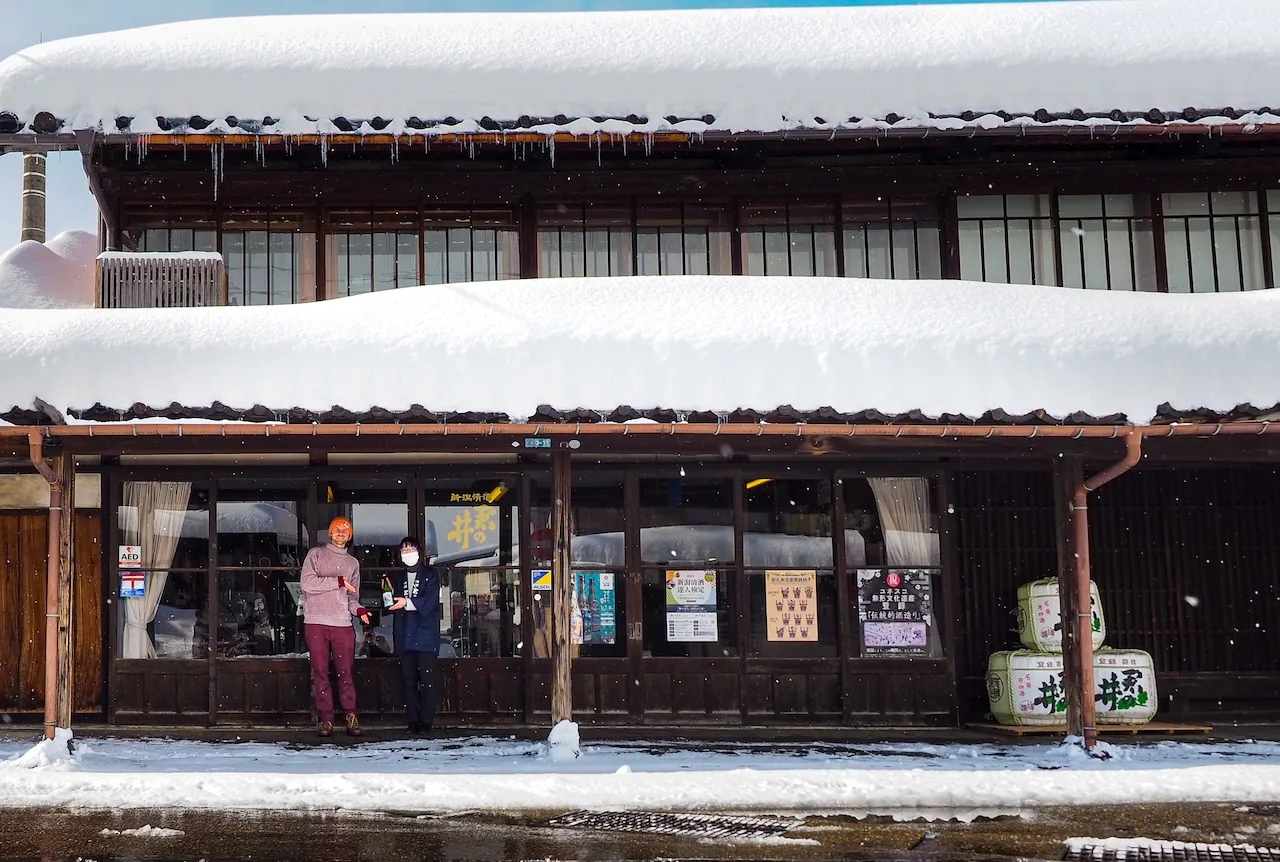
Conveniently located a ten-minute walk from Arai Station, Kiminoi Shuzo is one of Myoko’s most respected sake breweries. Founded in 1842, its location in this snow-heavy region ensures abundant access to pristine water essential for rice cultivation and sake brewing. It also sits along the former Hokkoku Kaido, once a vital highway for regional travel.
Kiminoi Shuzo continues to practice the labor-intensive yamahai method, relying on natural lactic acid bacteria to develop richer flavors. All sake uses 100 percent Niigata-grown rice, 60 percent sourced locally from Myoko.
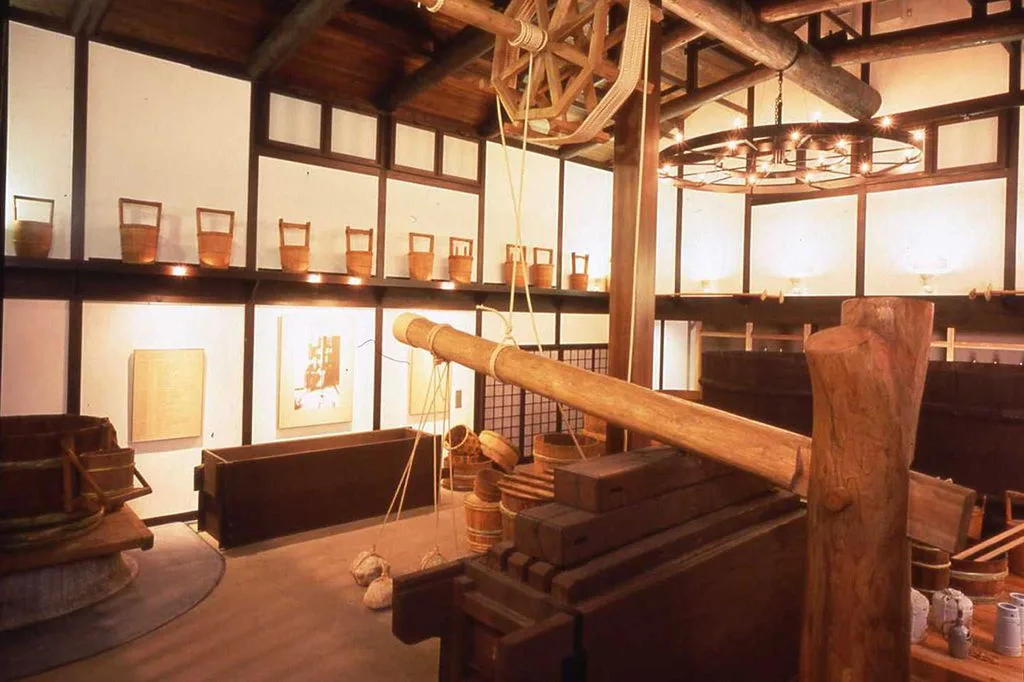
The stunning traditional wooden brewery is open for tours, tastings, and on-site purchases. During the tour, you can explore historic buildings, view antique tools alongside active brewing tanks, and admire the massive wooden ceiling beams that have withstood centuries of snowfall.
The Premium Brewery Tour (2,200 yen) includes a guided tasting of four premium sake varieties, English materials on sake history and fundamentals, and an original Kiminoi Shuzo tasting glass.
Address
新潟県妙高市下町3-11
Telephone Number
0255-72-3136
Opening Times
Warehouse Tour/Tasting Experience
9:00 am - 4:00 pm
About a 15-minute drive.
3
Takada Castle Site Park
Explore one of Japan's largest city parks, with a museum and library to boot!
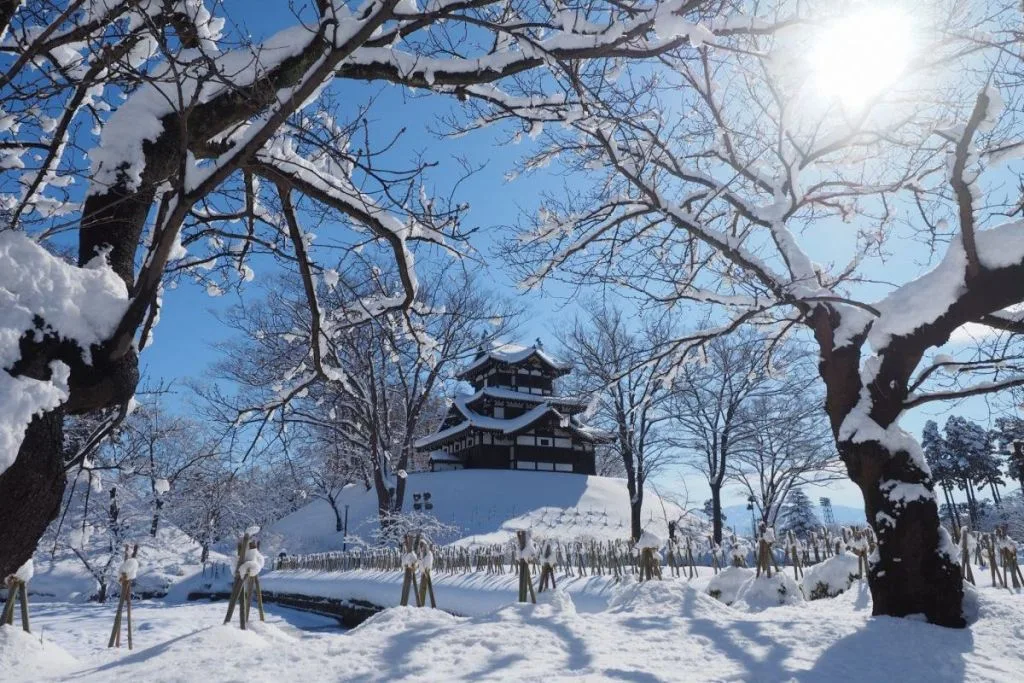
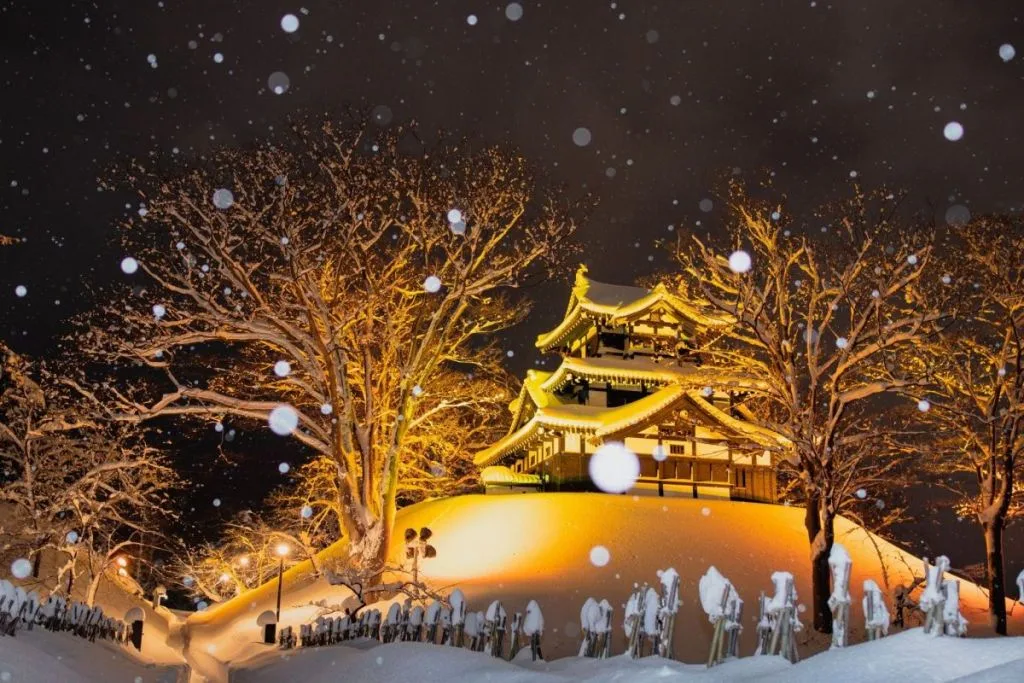
Takada Castle Site Park is one of Japan’s largest urban parks, covering approximately 50 hectares. The park was built on the site of Takada Castle, which was built by Tokugawa Ieyasu's sixth son, Matsudaira Tadateru. At the center of the park stands the majestic Three-Storey Turret, a nationally designated Historic Site that was reconstructed in 1993, based on old drawings of a castle’s turret from 1614 and archaeological excavations. Visitors can learn about the castle’s history within the turret, and panoramic views of the park can be enjoyed from the top floor.
The park also holds several cultural facilities that offer many opportunities to enjoy the arts, including history and art museums and a library, as well as sports facilities such as an athletic field and a grass field. It is beloved by local residents as a place of relaxation where the four seasons can be admired while strolling along the walking path near the outer moat. Other highlights include the residence of the Japanese painter Kobayashi Kokei and the restored Gokuraku Bridge that connects the Honmaru and Ninomaru areas.
Approximately 4,000 cherry trees bloom here in the spring, contributing to the park being considered as one of the three best nighttime cherry blossom viewing spots in Japan. The outer moat is also covered with lotus flowers in the summer, which are said to be the “best in the East,” and the turret covered in snow in the winter is breathtaking. This spot blends history, nature, and culture, creating an atmosphere that allows visitors embrace the moment.
Japan’s longest traditional wooden arcade built for life in deep snow
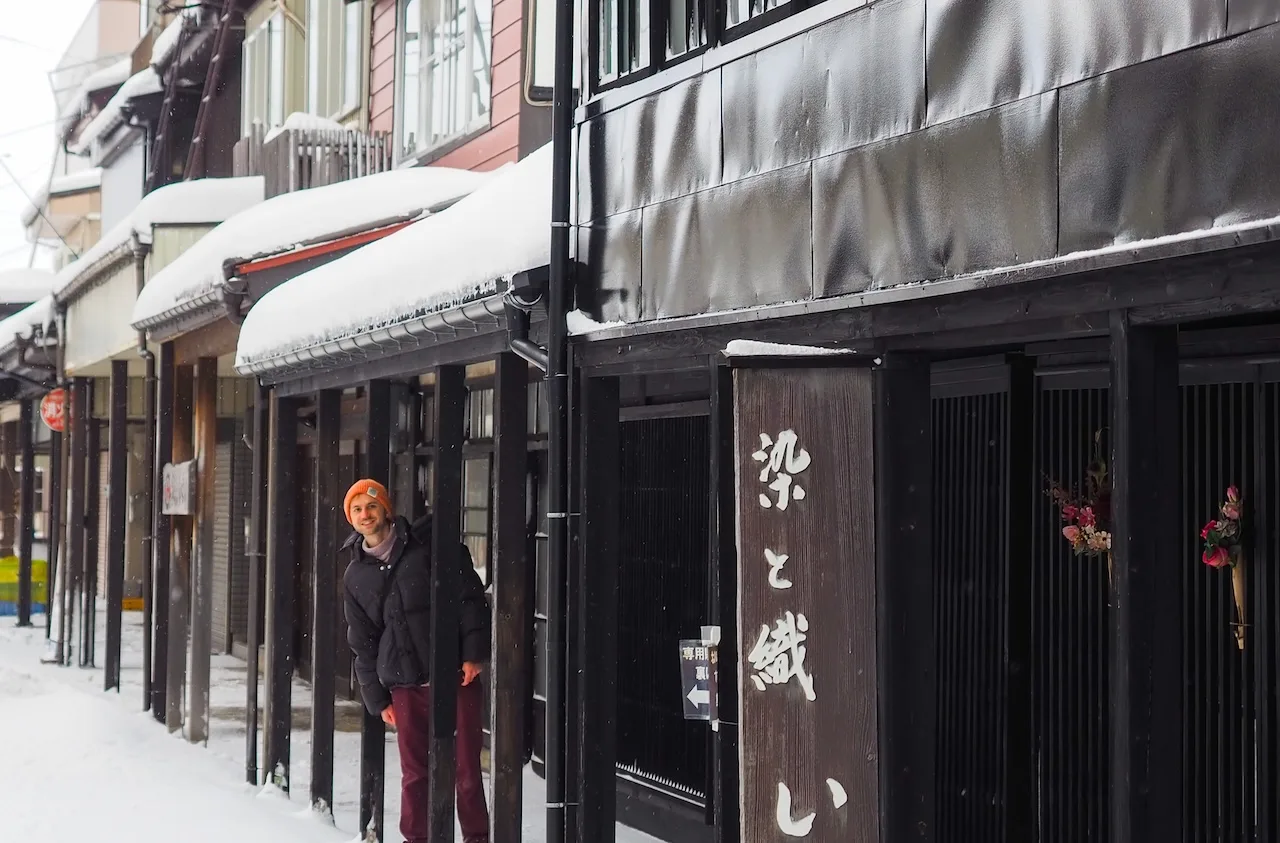
Gangi refers to a structure in which part of a house, typically an extended eave, projects over the street. Developed in Japan’s heavy snowfall regions like Joetsu, it reflects a shared, practical response to winter conditions, creating covered arcades that keep footpaths clear of snow and protect pedestrians. Although traditional gangi are now few in number, they used to be seen in cities all along the Sea of Japan coast. The Takada district still has gangi that stretch in total for 12 km, making them the longest in Japan.
Takada is also home to many traditional machiya townhouses, which have narrow frontages but stretch back a long way from the street. In the vicinity of Honmachi 6-Chome and Omachi 5-Chome, where Gangi Street is located, there are several old machiya that still retain traditional characteristics, such as the former Imai Dyeing Shop and the former Kanazu Kentaro Cooper Shop, as well as the Takada Komachi Machiya Exchange Hall, which serves as a central hub for walks around the town. Be sure to save time for a leisurely stroll along Gangi Street to fully appreciate its old-town atmosphere!
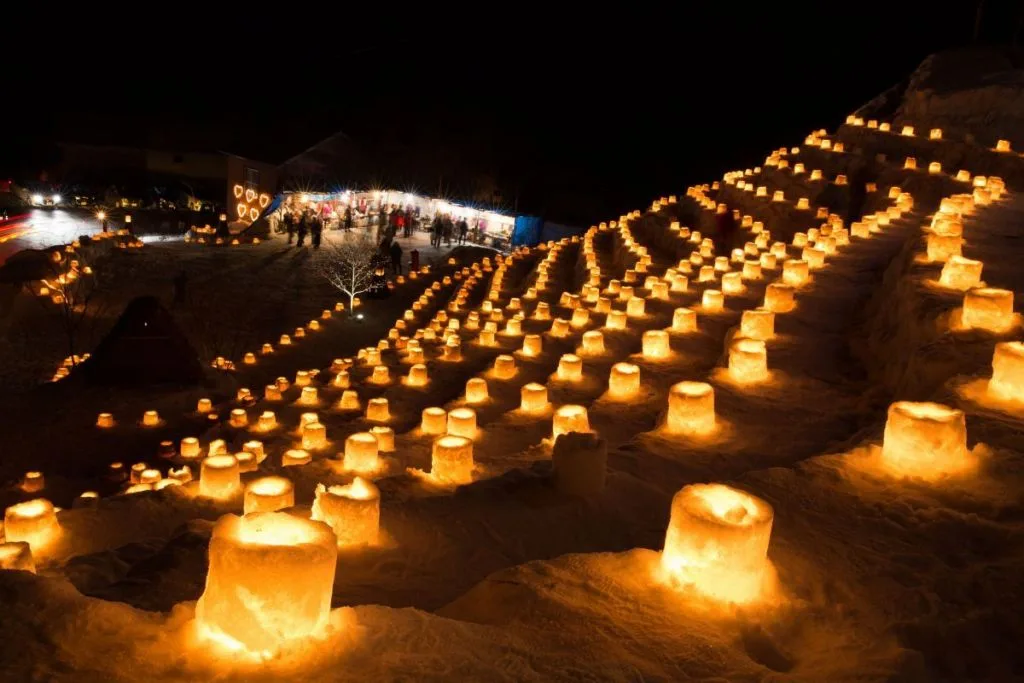
The Corridor of Lights is a dreamlike winter-only event held in February where areas across Joetsu City are illuminated by around 100,000 candlelights. Snow lanterns, each lit by hand by local residents, create a path of light. Amid the harsh cold, the scene conveys a sense of human warmth and draws visitors into a deeply moving moment.
There’s no better way to end a winter trip to Niigata than here, where gentle light accentuates the quiet beauty of snow country.
Address
新潟県上越市安塚区、大島区、浦川原区、牧区、高士区、名立区、三和区
Opening Times
5:00 pm - 9:00 pm (scheduled)
*Please check the official website for more information